

A clear, evidence-led checklist for assessing a Roy Lichtenstein print without treating a signature as proof.

Authentication is cumulative
Authenticating a Roy Lichtenstein print is not a matter of finding one magic feature. Confidence comes from several pieces of evidence agreeing: the image, medium, dimensions, paper, printing method, edition, inscriptions, publication history, provenance and condition. A signature is part of that evidence, not a substitute for it.
Identify the exact edition
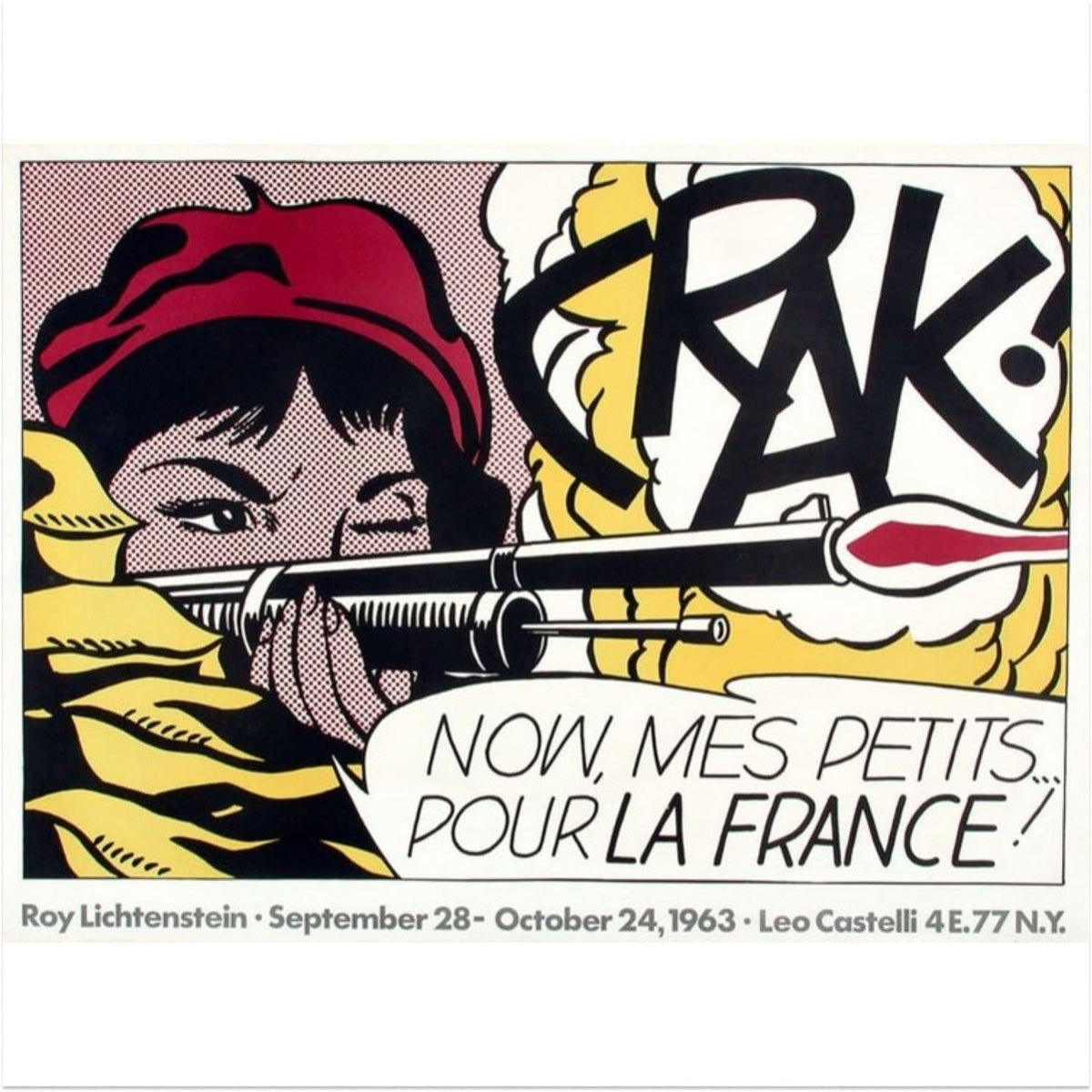
Begin with the full title and date, then establish whether the object is an original print, an exhibition poster or another published multiple. Similar images can appear in more than one format. Record sheet and image dimensions precisely and note the printing technique. Compare these facts with a recognised catalogue raisonné or authoritative publication rather than with marketplace listings that may repeat errors.
Examine the physical object
High-resolution front and back images are a minimum for remote assessment. Look at paper tone, margins, blind stamps, publisher marks, edition numbers and any labels. Under magnification, printing characteristics should be consistent with the stated process. Screenprinted colour, for example, behaves differently from the dot pattern of commercial offset reproduction. Such observations require experience and should not be overinterpreted from a compressed online photograph.
Read the signature in context
Check the location, medium and appearance of the signature and numbering against documented impressions from the same edition. Variation can occur, and a convincing-looking signature can be added to an unrelated object. Conversely, not every legitimate Lichtenstein-related work is signed. Posters and authorised publications may be unsigned by design. The catalogue entry and publication details determine what should be present.
Follow the provenance
Invoices, historic gallery labels, auction records and correspondence can establish where a work has been and how it was described. The strongest provenance forms a coherent chain. Treat vague stories cautiously, especially if they cannot be supported by documents. Also check whether labels and paperwork refer to the exact object rather than merely to an image with the same title.
Condition can reveal history
Fading, mat burn, adhesive residue, trimming and repairs may help explain an object’s display history, though they do not prove authenticity. They do affect desirability and value. Ask whether the work has been examined out of its frame and whether conservation has taken place. Never remove tape, clean paper or disturb a backing without professional advice.
When to seek expertise
For a significant purchase, use a reputable specialist, conservator or recognised authority with direct access to the work. Ask the seller for a written description, condition report, return terms and invoice. An evidence-led process protects both scholarship and the collector; certainty should be proportional to the quality of the documentation.
Authentication and attribution language
Descriptions should distinguish certainty from inference. ‘By Roy Lichtenstein’, ‘after Roy Lichtenstein’, ‘published for an exhibition’ and ‘reproducing a work by’ describe materially different relationships. A responsible seller states which evidence supports the wording and avoids using a signature or familiar image to collapse those distinctions. Precise language is one of the clearest signs of careful research.


Leave a comment
This site is protected by hCaptcha and the hCaptcha Privacy Policy and Terms of Service apply.