

The essential differences between Roy Lichtenstein original prints and exhibition posters—and why both can be worth collecting when described accurately.

Similar images, different objects
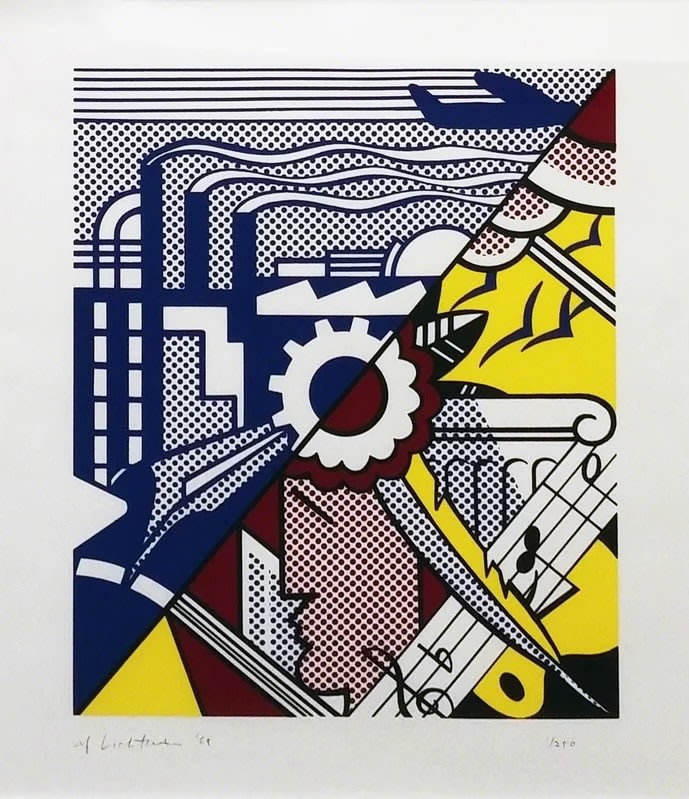
A Roy Lichtenstein original print and an exhibition poster may reproduce closely related imagery, but they are not interchangeable. The distinction concerns how and why the object was produced, the artist’s involvement, the edition structure and the publication’s intended function. Accurate description matters more than prestige: both categories can be visually rewarding and historically interesting.
What ‘original print’ means
In printmaking, ‘original’ does not mean a unique object. It usually describes a work conceived for a print process and issued as part of a defined edition under the artist’s direction. Lichtenstein worked across techniques including screenprint and lithography, often with specialist printers and publishers. The catalogue entry records medium, dimensions, date, edition and publication information.
What an exhibition poster is
A poster is generally produced to advertise or accompany an exhibition, museum programme or cultural event. It may use an image authorised by the artist and can be an important piece of design history. Posters may be printed commercially in larger numbers, and many are unsigned. Some were later hand-signed, but a signature does not transform the underlying poster into the original limited-edition print from which an image may derive.
Why confusion happens
Online titles often compress complicated distinctions into phrases such as ‘signed print’ or ‘limited edition’. Sellers may use ‘lithograph’ loosely for any printed sheet. The same composition may also appear at different sizes, with different text, or in publications made years apart. Collectors should therefore rely on the object’s full specifications rather than a thumbnail or familiar image.
How to compare them
Check whether the catalogue raisonné lists the work, and compare title, date, technique, sheet size, publisher, printer and edition. Look for text integrated into the design, museum details or event dates that identify a poster. Ask whether a signature is printed or hand-applied. Front and back photographs can reveal credits, labels and condition issues hidden by a frame.
Collecting posters on their own terms
A strong exhibition poster can offer excellent scale, colour and historical context at a more accessible price. Rarity may arise through survival rather than a numbered edition: posters were made to be displayed and many were damaged or discarded. Condition, design, institution and connection to an important exhibition can all influence desirability.
A clear buying rule
The invoice and listing should state exactly what the object is. Buy an original print for its place within Lichtenstein’s editioned practice; buy a poster for its graphic force and cultural history. The problem is not that one category is inherently invalid, but that ambiguity prevents informed comparison.
Publication history is cultural history
A poster’s institution, designer, date and exhibition context can make it an important object in its own right. It records how Lichtenstein’s work was presented and circulated to a public. Collecting that history does not require pretending the poster is an original edition. Accurate categories allow aesthetic, documentary and market value to be discussed without one being used to disguise another.


Leave a comment
This site is protected by hCaptcha and the hCaptcha Privacy Policy and Terms of Service apply.