
A print can be correctly catalogued, authentic and desirable while still varying materially in condition from another impression of the same edition. Paper is responsive to light, humidity, handling and mounting, so condition and framing deserve the same attention as signature and edition number.
Why works on paper require care
Paper absorbs moisture and reacts to changing environments. Excess humidity can encourage distortion or mould; very dry conditions may contribute to brittleness; prolonged ultraviolet exposure can fade inks and discolour the sheet. Even a well-kept print can show minor signs of age, particularly around the edges or on the reverse.
Common condition terms
Foxing describes small brown spots associated with age and environmental conditions. Toning refers to a general change in the paper’s colour. Mat burn can appear where an acidic mount has contacted the sheet. Handling creases are soft bends caused by movement, while a hard crease breaks the paper fibres more decisively.
Other points include tears, losses, abrasions, surface dirt, rippling, adhesive residue and fading. None should be hidden behind vague language. Their significance depends on location, visibility and the nature of the work.
What does “in excellent condition” mean?
Condition descriptions are necessarily relative to the work’s age, materials and history. “Excellent condition” should mean that there are no issues of consequence apparent on reasonable examination, not that the object is literally indistinguishable from the moment it left the printer. A recent print may justifiably be described as pristine or as new when the evidence supports it; an older sheet may be excellent for its age while retaining unobtrusive characteristics of handling.
Good framing practice
A well-designed frame protects the work while allowing it to be viewed properly. Conservation-minded framing commonly uses acid-free or museum-quality mount materials and glazing with ultraviolet filtering. The artwork should not be pressed directly against the glazing, and attachments should be reversible wherever practicable.
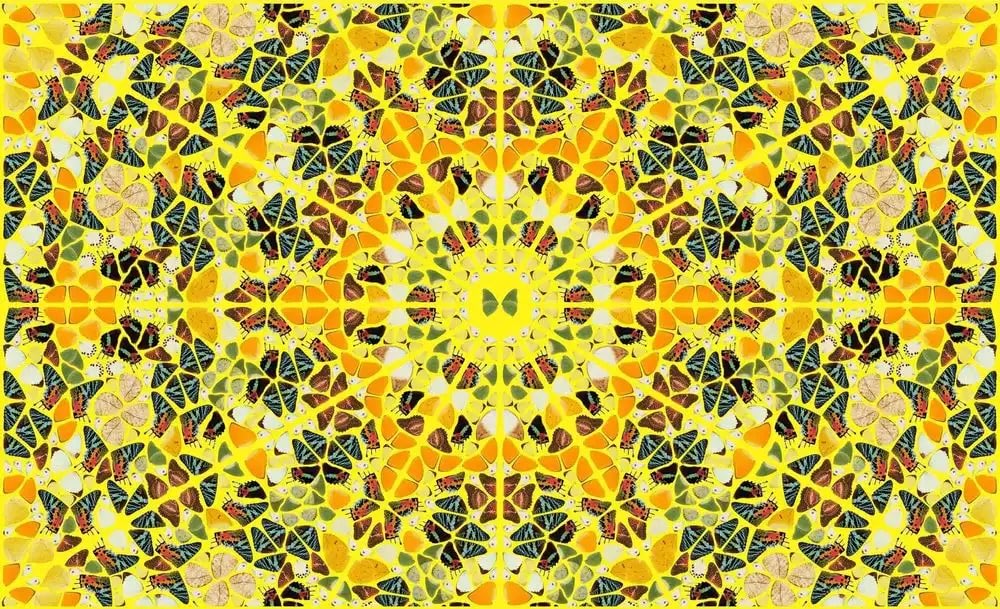
Permanent dry mounting can materially change a work on paper and should be identified. Some contemporary works, however, are intentionally produced or issued on rigid supports. Damien Hirst’s H18-4 Splendour (The Kaleidoscopes), for example, is a Diasec-mounted giclée print on aluminium composite panel: the mounting is part of the edition’s original specification.
Questions to ask before buying
- Has the full sheet been inspected outside the frame?
- Is the work laid down or attached only at selected points?
- Are there visible changes to colour, surface or paper?
- Is the frame archival and is the glazing suitable?
- Does the condition report distinguish the artwork from the frame?
- Are photographs of the reverse available where appropriate?
Condition should be reported calmly and proportionately. Minor characteristics do not necessarily undermine a work, but accurate disclosure lets a collector make an informed judgment and plan future care.
For the other elements of a complete listing, read our guide to understanding limited-edition print descriptions.
Explore: Browse available works, or contact Dovehouse Contemporary to request further images or a condition report.

Leave a comment
This site is protected by hCaptcha and the hCaptcha Privacy Policy and Terms of Service apply.