
A print description can appear deceptively simple: artist, title, year, medium, dimensions, edition and signature. Yet almost every line affects what the object is, how it should be compared with another example and, ultimately, how a collector should assess it. “Print” is not a single category. It covers numerous processes, publication histories and degrees of artist involvement.
The purpose of a good listing is not to overwhelm the reader with terminology. It is to identify the work precisely enough that two apparently similar objects are not mistaken for one another.
Original print, edition and reproduction
An original print is conceived as a work in a print medium—such as screenprint, lithograph, etching, woodcut or linocut—rather than as a later photographic copy of another artwork. “Original” does not mean unique: the work may be produced in a numbered edition, with each impression forming part of the same edition.
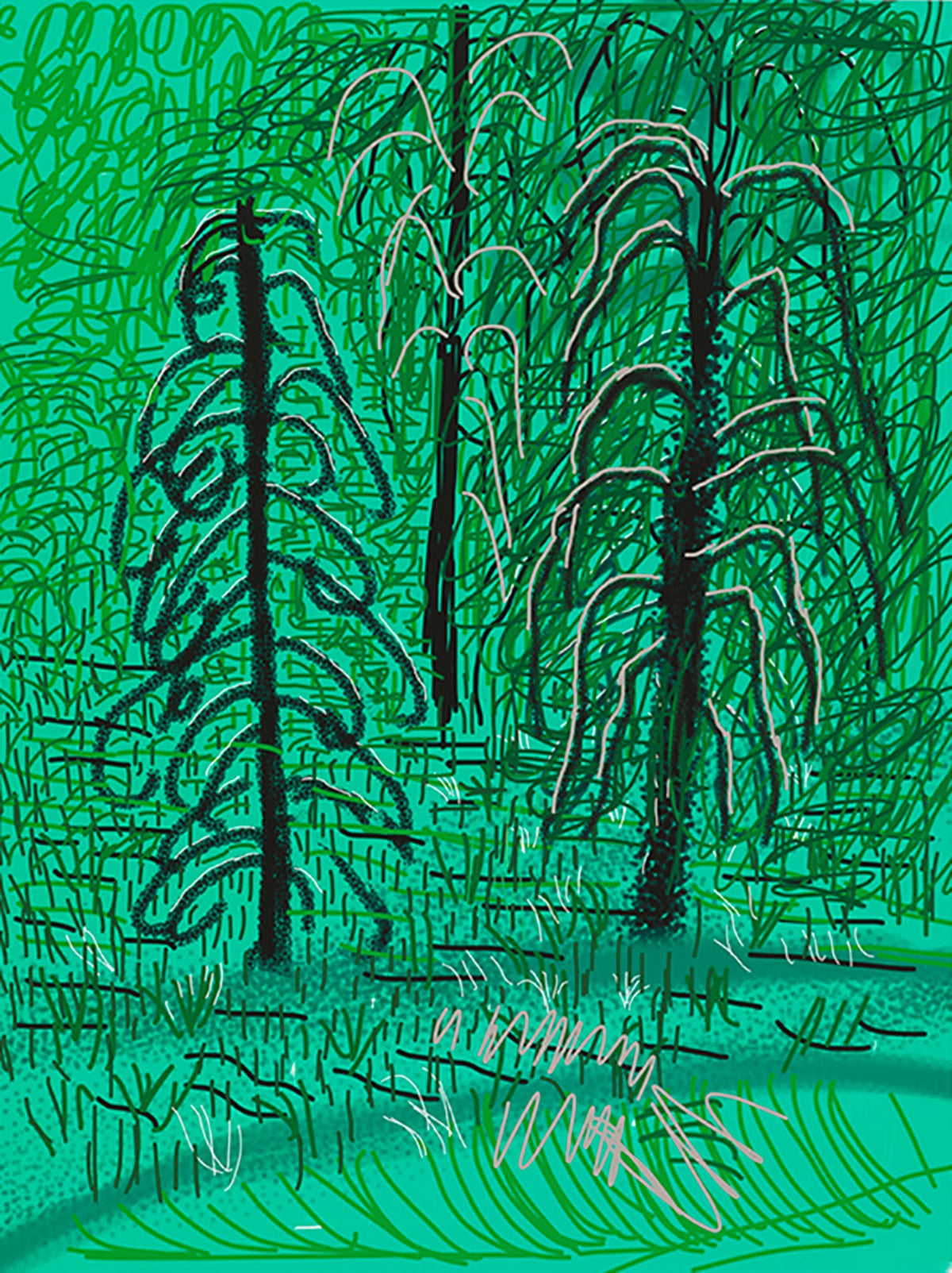
Contemporary practice makes the boundary more varied. David Hockney’s Untitled No.16 from The Yosemite Suite, for example, is recorded as an iPad drawing printed on paper. The digital drawing and its printed form belong to the conception of the work; it is not adequately described simply as a reproduction of a painting.
Understanding the edition number
A fraction such as 12/50 normally identifies the individual impression and the size of the numbered edition. The first number is not a quality ranking: impression 1/50 is not inherently superior to 42/50. What matters is that the numbering is consistent with the documented edition and that the signature, publisher and physical specifications are appropriate.
Edition size can influence rarity, but it should not be read in isolation. Scale, medium, date, subject and demand all matter. Robert Longo’s Crystal Chandelier, a large pigment print from an edition of 15, occupies a very different category from Invader’s Rubik Country Life NVDR1-3, recorded in an edition of 431. Both are editioned works; they were conceived for different formats and audiences.
AP, PP and other proofs
AP denotes an artist’s proof. PP usually denotes a printer’s proof. Other abbreviations can include HC, meaning hors commerce, or EA, the French equivalent of artist’s proof. Proofs sit outside the principal numbered edition, although they are generally produced at the same time and from the same matrix or file.
A proof is not automatically rarer in a meaningful sense simply because fewer examples carry that designation. Buyers should ask how many proofs were produced, whether the proof is signed and how it relates to the standard edition. The wording on the work itself should correspond with the listing.
Signature and date
“Signed” should specify where and how whenever possible: pencil or ink, recto or verso, hand signed, plate signed, stamp signed or signed on a label. These terms are not interchangeable. A plate signature is part of the printed image; a hand signature is added individually. A stamp signature uses an authorised stamp and should be described as such.
The date also requires care. Some editions reproduce an image created many years earlier. Frank Bowling’s Doughlah G.E.P is described as 1971/2023, distinguishing the date associated with the source work from the later edition. Removing either date would make the description less accurate.
Medium, paper and mounting
Screenprint, offset lithograph, photolithograph, pigment print and giclée describe different processes. Paper type and mounting can also be significant. A Diasec-mounted print on aluminium composite panel should not be assessed or conserved in the same way as an unmounted work on cotton rag paper.
Dimensions should make clear whether they refer to the sheet, image or framed object. Where a set contains several sheets, the listing should say whether the dimensions apply to each component or the group as installed.
Condition, provenance and the final check
Before buying, confirm that the description corresponds with photographs of the actual work. Request images of the signature, numbering, reverse and any publisher’s marks where relevant. Condition should be considered in relation to the medium: paper may show handling marks, creases or light exposure, while mounted works can present different edge and surface issues.
Provenance should establish the known chain of ownership without making claims that the documentation cannot support. A condition report and supporting paperwork are not decorative extras; they help identify the object being acquired.
Explore David Hockney, Frank Bowling, Robert Longo and Invader editions currently available through Dovehouse Contemporary, or contact the gallery if you would like help interpreting the specification of a particular work.

Leave a comment
This site is protected by hCaptcha and the hCaptcha Privacy Policy and Terms of Service apply.