
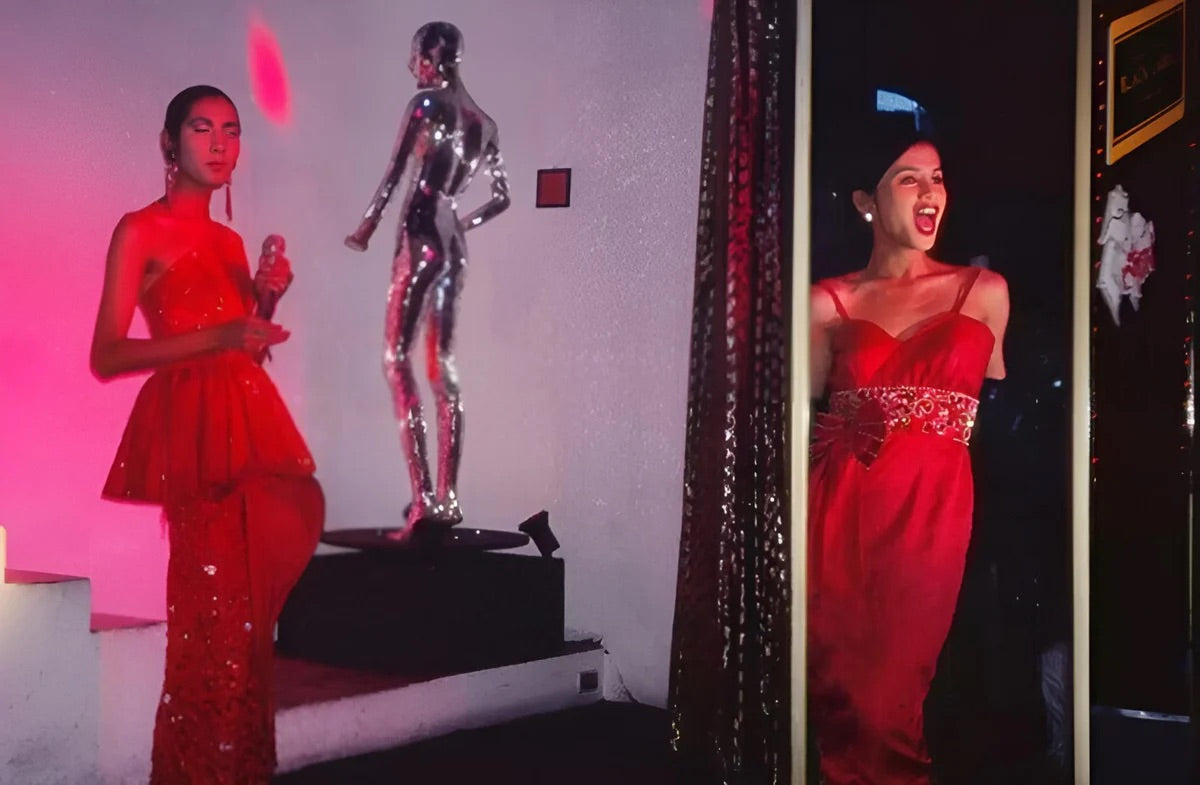
Few photographers have reshaped the boundaries between art and life as profoundly as Nan Goldin. Emerging in the late 20th century, Goldin built a body of work that feels less like traditional photography and more like a raw, unfiltered diary- one that documents love, loss, addiction, and identity with startling honesty.

Goldin first gained widespread recognition with her seminal work, The Ballad of Sexual Dependency. Originally presented as a slideshow set to music, the project captures the lives of her close-knit circle of friends in New York during the 1970s and 1980s. These images are deeply personal: lovers in bed, moments of tenderness and violence, parties, drug use, and the quiet aftermath of emotional turmoil. Rather than observing from a distance, Goldin was embedded within the world she photographed. This closeness gives her work a sense of authenticity that is difficult to replicate.

At a time when photography often aimed for objectivity or aesthetic distance, Goldin rejected both. Her style is intentionally immediate- flash-lit, grainy, and emotionally charged. She wasn’t trying to create polished images; she was trying to tell the truth as she experienced it. This approach aligned her with broader movements in contemporary art that blurred the line between public and private life, but her voice remained uniquely her own.
Much of Goldin’s work is shaped by her personal history. Having left home at a young age and experienced profound loss early in life, she found community among marginalized groups- drag queens, LGBTQ+ communities, and others living outside mainstream society. Her photographs document these communities not as subjects of curiosity, but as chosen family. In doing so, she helped bring visibility and humanity to lives that were often ignored or misrepresented.

The AIDS crisis of the 1980s had a devastating impact on Goldin’s circle, and her work from this period becomes even more poignant as it captures people and moments that would soon be lost. Her images serve not only as artistic expressions but also as historical records, preserving the emotional reality of a generation affected by the epidemic.

In later years, Goldin’s activism became more prominent, particularly in her opposition to the role of the Sackler family in the opioid crisis. Through her advocacy group, P.A.I.N. (Prescription Addiction Intervention Now), she organized protests in major museums that had accepted funding from the Sacklers. This marked a shift from documenting personal struggles to actively confronting systemic issues, though both are rooted in the same commitment to truth and accountability.
Today, Nan Goldin is widely regarded as one of the most influential photographers of her generation. Her work challenges viewers to confront uncomfortable realities while also recognizing the beauty and complexity of human relationships. By turning the camera on her own life and those around her, she transformed photography into a deeply personal and politically resonant art form- one that continues to shape how stories are told through images.
VIEW WORKS BY NAN GOLDIN
Closeness does not remove the act of selection
A photographer working among friends still chooses when to make an image, which frame to retain and how it will be shown. Goldin's intimacy with her subjects is central to the work, but it should not be mistaken for the absence of artistic construction. The photograph can be both an encounter within a relationship and a selected image that later acquires a public life.
This distinction makes the work more complex than a claim of unfiltered truth. A single photograph cannot contain everything about the person or moment it records. Looking responsibly means acknowledging the connection that made the image possible while retaining awareness of what remains outside the frame.
Sequence changes what a photograph means
In a slideshow or book, one image prepares the viewer for another. Repetition, contrast and the passage of time can turn individual moments into a larger account of relationships. Music can also shape the emotional pace. A photograph encountered alone on a wall therefore offers a different experience from its place within a sequence, even when the image itself is unchanged.
Ask what the surrounding images or publication contribute. Does a later photograph alter the reading of an earlier one? Does a recurring person become more familiar without becoming fully knowable? These questions reveal why an individual image should not always be treated as a complete statement detached from the project in which it appeared.
Colour carries the conditions of the encounter
Artificial light, shadow and the temperature of a room can become emotionally significant within a photograph. They do more than describe an environment. A warm interior or a dark exterior can affect the distance the viewer feels from the subject. In a printed work, preserving those relationships requires attention to the actual process, paper and condition.
When browsing the Nan Goldin collection, distinguish image date from print or publication date where they differ. Ask whether the object is a photographic print, a poster or another editioned publication, and confirm signing and edition information. The condition guide provides practical questions for the support and display history.
Goldin's work rewards an encounter that is emotionally open and factually precise. We can respond to the intimacy of an image without assuming it grants unrestricted access to another person's life, and appreciate its history without confusing the many physical forms through which it may circulate.
Related reading
- Helmut Newton: The Signed Photolithograph and the Theatre of Fashion
- Robert Longo: When Photography Becomes Monumental
- How Condition and Framing Affect a Contemporary Print
Intimacy is a relationship
Goldin’s photographs feel immediate because they emerge from relationships rather than detached observation. Yet intimacy does not make an image transparent or neutral. Selection, sequencing, caption and later circulation shape how a private moment enters public history. The work asks viewers to recognise both closeness and the ethical distance that remains.
Photograph and publication
The same image may exist as a photographic print, slide-show component, book plate, poster or later publication. Establish process, print date, dimensions, edition, signature and provenance. Colour balance is central to Goldin’s visual language, so fading and inaccurate reproduction matter. Condition and object type must be described precisely before market comparisons are meaningful.

Leave a comment
This site is protected by hCaptcha and the hCaptcha Privacy Policy and Terms of Service apply.