
Alongside a numbered edition, collectors frequently encounter impressions marked AP, PP, HC or TP. These letters identify proofs: works produced in connection with the edition but set aside for a particular purpose. They can be scarcer than the numbered impressions, although scarcity and value are not the same thing.
Artist’s proof: AP or A/P
An artist’s proof was traditionally reserved for the artist from the total printing. In contemporary editions, artist’s proofs are normally made at the same time, from the same matrix and on the same paper as the principal edition. They may be numbered separately—such as AP 3/10—or simply inscribed AP.
Collectors sometimes assume that an artist’s proof is technically superior. That may have been more relevant when impressions changed as a plate wore, but modern editions are generally controlled to achieve consistency. An AP is attractive because of its association and smaller stated group, not because it is automatically a sharper or earlier impression.
Printer’s proof: PP
A printer’s proof is reserved for the workshop or specialist printer responsible for producing the edition. These impressions acknowledge the collaborative skill involved in translating an artist’s image into print. They may be very limited in number and are usually marked PP.
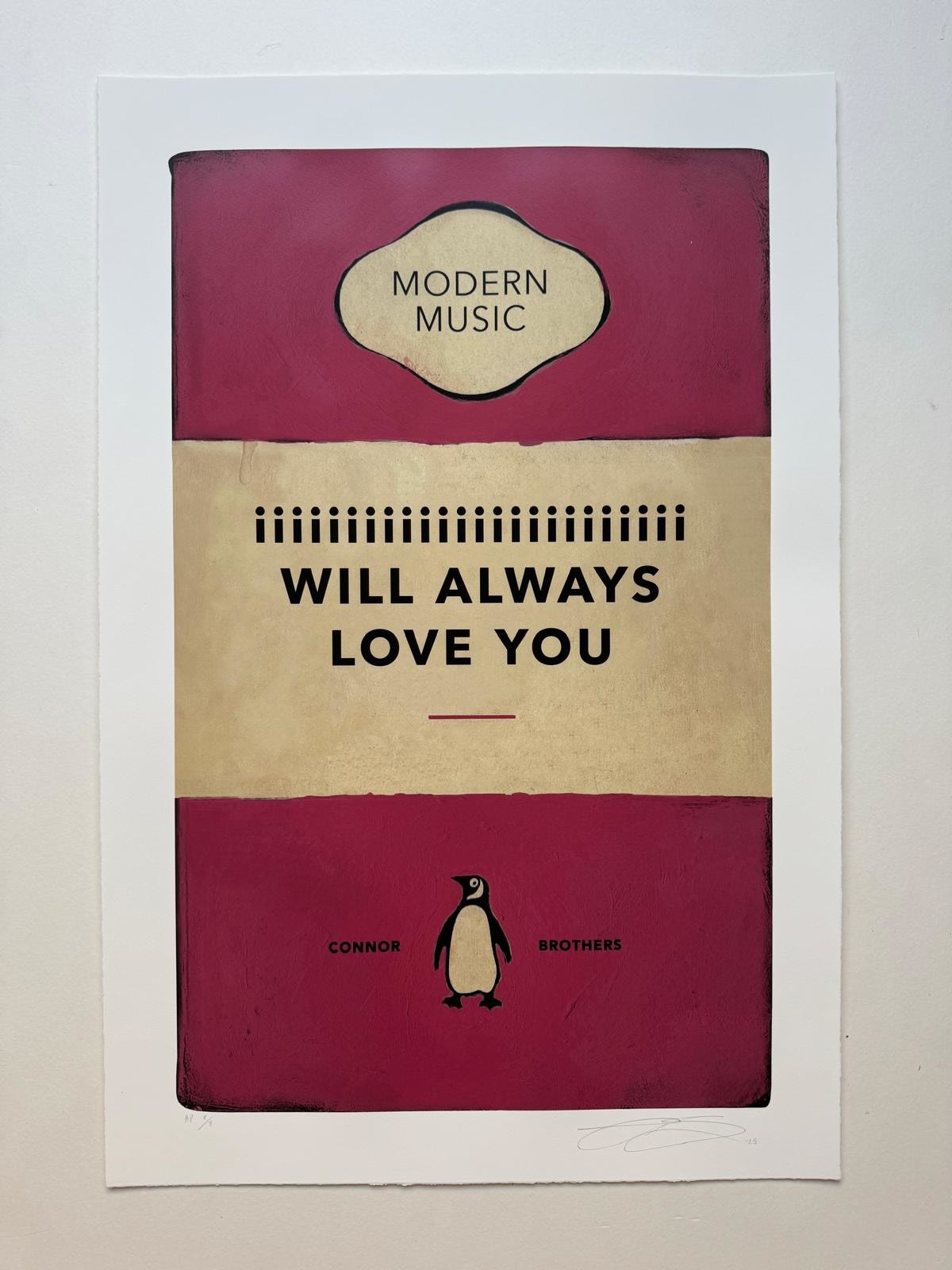
The inscription on The Connor Brothers’ IIIII Will Always Love You, for example, identifies it as a signed printer’s proof. That status should be recorded alongside the medium, date, dimensions and main edition.
Hors commerce: HC
Hors commerce means “outside trade.” HC impressions were historically not intended for ordinary commercial sale and might be retained by the publisher or used for presentation. Like artist’s proofs, they can subsequently enter the market legitimately. Their inscription should be consistent with the documented edition structure.
Trial proof: TP
Trial proofs record stages in the development of an image before the final edition was fixed. Colours, papers or compositional details may differ. A genuine trial proof can therefore reveal the artist’s working process, but the term should be used precisely rather than as a general synonym for rarity.
Are proofs more valuable?
Sometimes—but not automatically. The market considers the artist, image, date, total edition, desirability and condition. A proof from an unimportant edition does not become important merely because fewer examples carry that inscription. Conversely, a well-documented proof of a sought-after image can be particularly appealing.
When reviewing any proof, ask:
- How many proofs were produced?
- Are they recorded in the edition documentation or catalogue raisonné?
- Is the inscription handwritten and consistent?
- Does the work match the standard edition in medium and dimensions?
- Is the provenance coherent?
For the wider vocabulary of editions, see our guide to reading limited-edition print descriptions.
Explore: View available contemporary prints and editions, or ask the gallery about the edition structure of a particular work.

Leave a comment
This site is protected by hCaptcha and the hCaptcha Privacy Policy and Terms of Service apply.