
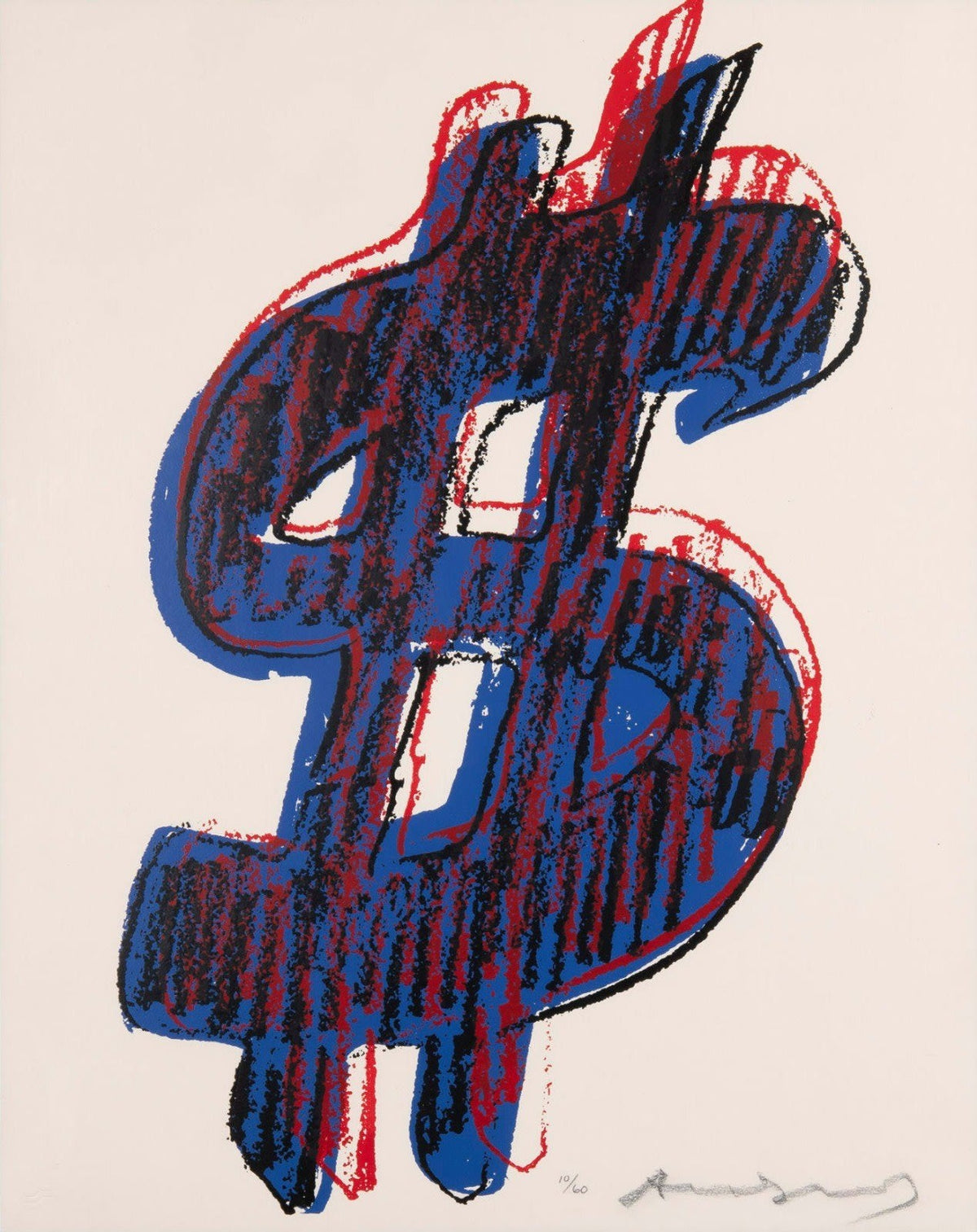
For many collectors, the words signed by the artist are among the first details noticed in a print description. A signature establishes a direct connection between artist and object, but it should never be considered in isolation. The edition, publisher, printing method, paper and provenance all help determine precisely what is being offered.
Where is the print signed?
Signatures commonly appear in pencil in the lower margin, although artists have used many other approaches. Some sign within the image, on the reverse, on a label or on a separate certificate. The correct placement depends on the artist and the edition. A reverse signature is not inherently less valid than one on the front; it simply needs to be consistent with the recognised format of that work.
Collectors should also distinguish between a handwritten signature and a signature reproduced as part of the printed image. The latter can be entirely appropriate for a poster or authorised reproduction, but it is not the same thing as a work individually signed by the artist.
Signature and edition number
A conventional inscription such as “12/50” identifies the individual impression and the stated size of the numbered edition. The signature confirms the artist’s authorship or approval, while the fraction places that impression within the edition. Neither number 1 nor another low number is automatically a better impression in modern printmaking: editions are not necessarily printed and signed in numerical order.
Other inscriptions—AP, PP, HC or TP—describe proofs made outside the principal numbered edition. Their meaning matters, but rarity alone does not guarantee greater desirability. Our related guide to reading a limited-edition print description explains the essential terminology.
What should a collector verify?
- That the signature method and placement correspond with the edition.
- That the numbering, medium and dimensions match established records.
- That provenance supports the work’s history.
- That condition has not compromised the paper, ink or signature.
- That any catalogue raisonné reference is stated accurately.
A strong listing should bring these details together clearly. Consider, for example, Andy Warhol’s Dollar Sign, a screenprint whose edition information is integral to understanding the object, or Gerhard Richter’s Self-portrait, where the recorded catalogue reference and reverse inscription form part of the work’s identity.
Is an unsigned print necessarily inferior?
No. Some important editions were intentionally unsigned, while others were issued as exhibition prints or authorised multiples. What matters is whether the object is correctly described. An unsigned work should not be presented as though it belongs to a signed edition, but it may still be historically interesting, scarce and collectable in its own right.
The signature is best understood as one piece of evidence within a larger account of the work. At Dovehouse Contemporary, we focus on the complete description: artist, title, year, medium, dimensions, edition, signature, publisher where known, condition and provenance.
Explore: Browse artists and available prints and editions, or contact the gallery for further information about a particular work.



Leave a comment
This site is protected by hCaptcha and the hCaptcha Privacy Policy and Terms of Service apply.