
A practical framework for a closely documented print market.
Catalogue references, edition details, signatures, publishers and condition materially shape each work’s identity.

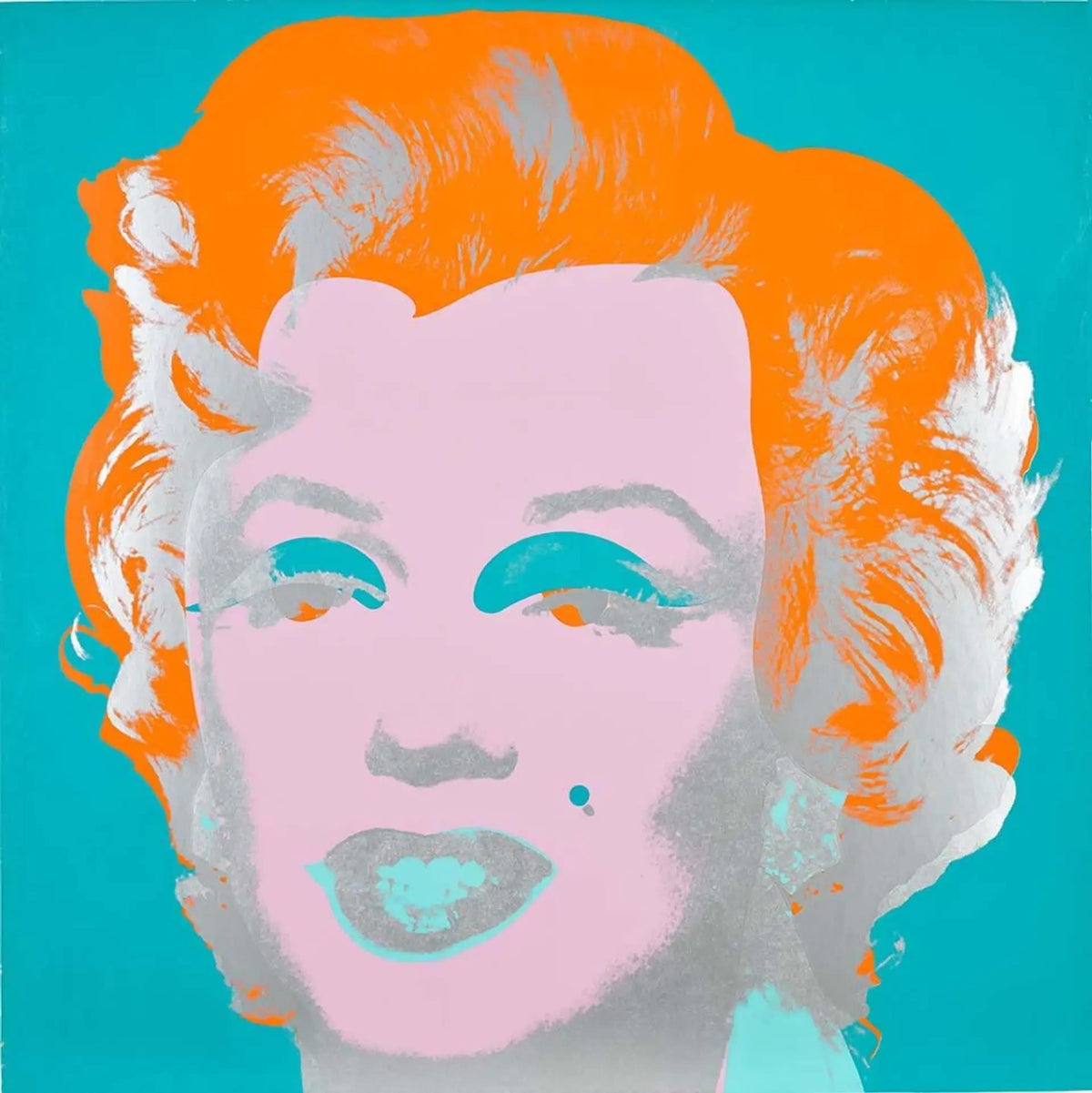
Selected work: Marilyn F. S. 29.
Start with the catalogue entry
Warhol’s print market is unusually well documented. Establish the exact title, date, medium, sheet size, edition and catalogue raisonné reference before comparing prices. A familiar image can exist in several formats, portfolios, colourways and proof types. Marilyn F. & S. 29, for example, should be assessed as a specific catalogue entry rather than simply as “a Marilyn”.
Understand the edition structure
Regular editions may sit alongside artist’s proofs, printer’s proofs and other designated impressions. Those categories are not interchangeable, and scarcity alone does not determine quality. Confirm how the impression is numbered and whether its description matches the published edition information.
Read signatures in context
Warhol signed works in different places and sometimes at different stages of production. A signature should be considered alongside provenance, catalogue information and the physical object, never as a substitute for them. The relevant question is whether all the evidence forms a consistent history.
Separate printing variation from damage
Screenprints can show registration shifts and differences in ink deposit that belong to the process. Condition issues such as fading, abrasion, creasing or restoration are different. High-resolution images and a clear report matter especially for saturated works such as Orangutan F. & S. II.299 and Dollar Sign.
Provenance should follow the sheet
Invoices, labels, prior auction records and framing history help connect the present work to its past. Ask what documentation will transfer with the print and keep those records together. Good provenance supports confidence, but it must agree with the catalogue description and condition.
Warhol in focus
Browse available Andy Warhol works, then continue with the essays on screenprinting, Marilyn and Campbell’s Soup Cans.
Define what belongs in the comparison
Before building a shortlist, decide whether you are comparing works from one series, images with a shared subject or objects within a particular budget. These are different exercises. A Marilyn screenprint, an exhibition poster and an editioned object may all offer an encounter with Warhol's imagery, but their publication histories and collecting contexts differ. A clear brief helps prevent a familiar face or attractive price from concealing that difference.
Write down the complete description of each candidate in the same order: title, date, medium, dimensions, edition, signature, publisher, printer and catalogue reference where documented. Mark anything not yet supplied as a question. This simple discipline makes omissions visible. It also allows the gallery to respond precisely instead of answering a general request for more information with another overall photograph.
Use the catalogue reference as an index
References commonly abbreviated to F. & S. point collectors towards the Feldman and Schellmann catalogue of Warhol's prints. Their purpose is identification. A reference should connect the image and physical specifications to the appropriate entry; it is not a certificate attached automatically to any sheet described with that number. If the illustrated work, colours or dimensions do not appear consistent, the discrepancy needs an explanation before comparisons proceed.
Catalogue information can also clarify whether related images are separate publications or variations within a documented project. That distinction matters when looking at proof designations or a colour combination you have not seen before. Ask for the relevant entry or an accurate account of it, rather than treating an unfamiliar appearance as evidence that a sheet is unique. Where scholarship or attribution is unresolved, the description should acknowledge that uncertainty.
Read the evidence in layers
The image and inscription are the first layer. The paper, printing and dimensions are another. Documentation supplies a further layer: prior invoices, exhibition labels, auction records or correspondence may help follow the specific sheet. Confidence comes from the agreement between those layers. A persuasive story cannot compensate for a physical mismatch, just as a plausible appearance cannot supply a missing history.
Photographs of the reverse can be especially useful because labels, annotations and mounting evidence may be absent from front views. Ask what is original to the work and what was added by a later owner or framer. A label should be recorded accurately, including its wording and location. It should not be converted into a stronger claim of exhibition or ownership than the evidence actually supports.
Understand the whole sheet
Warhol's graphic images can dominate attention so completely that collectors overlook the paper around them. Yet margins, edges and the relationship between image and sheet are part of the edition's identity. A full-sheet photograph helps reveal whether a frame hides damage or whether the work has been cut down. Measurements should distinguish the visible opening of a mount from the actual paper dimensions.
Ask whether the work has been examined out of its frame. If not, the condition report should make that limitation explicit. The gallery should not imply that concealed areas have been inspected. Mounting can be reversible or more intrusive, and a conservator may be needed to assess adhesives, backing or restoration. A handsome frame is presentation, not evidence that the paper beneath it is sound.
Compare condition without demanding impossible perfection
Older works on paper can carry evidence of handling and age. The relevant questions concern the nature, extent and visual effect of that evidence. A small issue outside the image, a pronounced crease through a face and substantial fading should not be described as equivalent. Ask for precise locations, clear photographs and an account of any treatment. Condition terms are most useful when supported by observable detail.
When comparing offers, include those differences alongside the image and edition. A cheaper impression may be less attractive once restoration, framing or documentation is considered. Conversely, a work with a disclosed minor issue may still be appropriate for a collector who understands and accepts it. No general rule about an artist's market can replace assessment of the particular sheet.
Keep the transaction record with the artwork
The final invoice should describe the work consistently with the information used to make the decision. Retain the condition report, photographs, correspondence and any provenance documents that transfer with it. If a catalogue entry or proof designation was central to the purchase, keep the supporting explanation too. These records will make later insurance, conservation and resale discussions clearer, even when the work stays in the same collection for many years.
For further background, the gallery's guide to proof designations explains why labels such as AP and HC require publication-specific context. Combine that practical reading with the artist essays linked below. Accurate identification and sustained looking support each other: the paperwork tells you what the object is, while attention to its colour, scale and structure helps explain why you want to live with it.


Leave a comment
This site is protected by hCaptcha and the hCaptcha Privacy Policy and Terms of Service apply.