
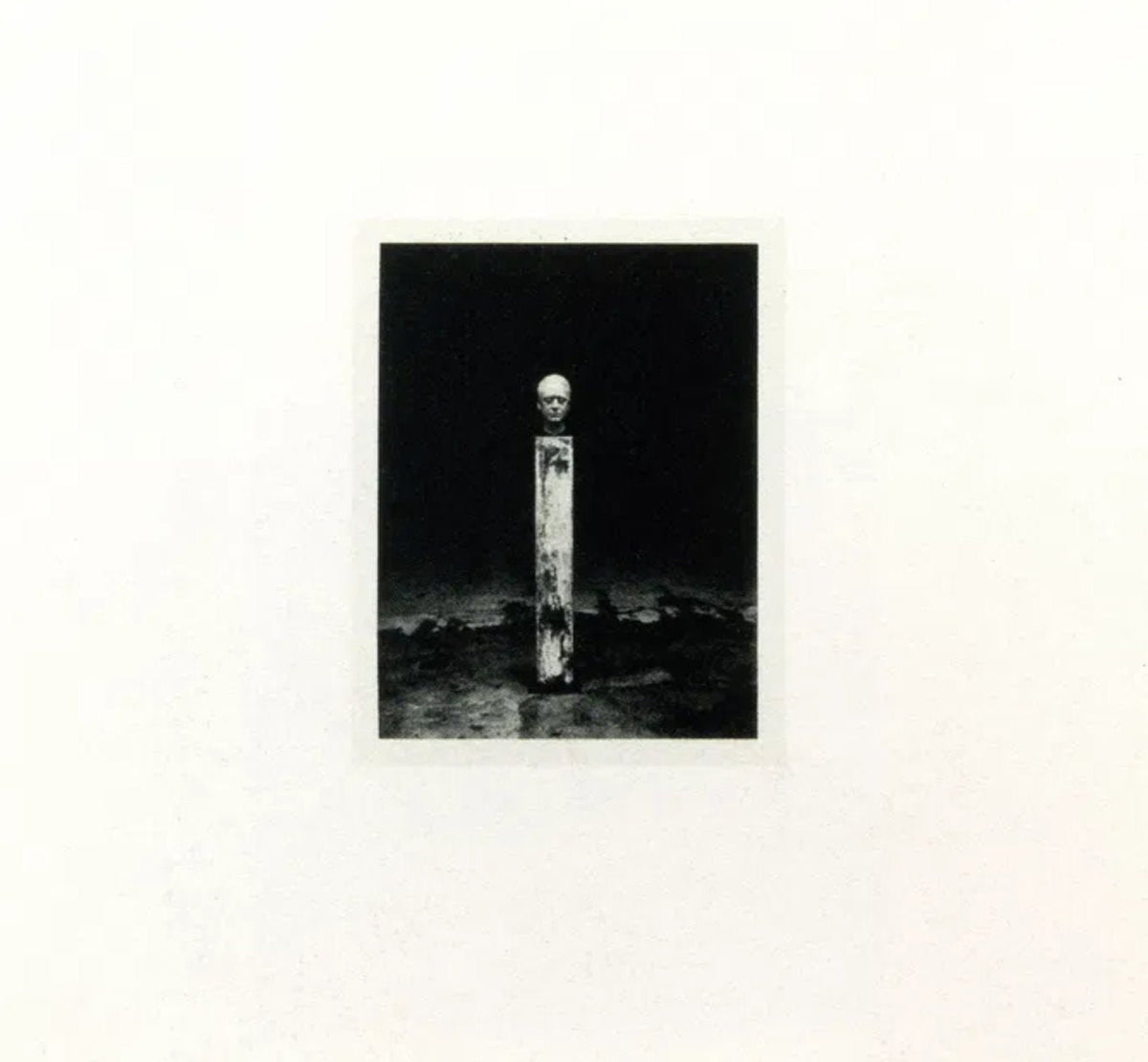
Why softened images are about more than photography.
Blur delays recognition, limits certainty and makes viewers conscious of painting as mediation.

Selected work: Self-portrait.
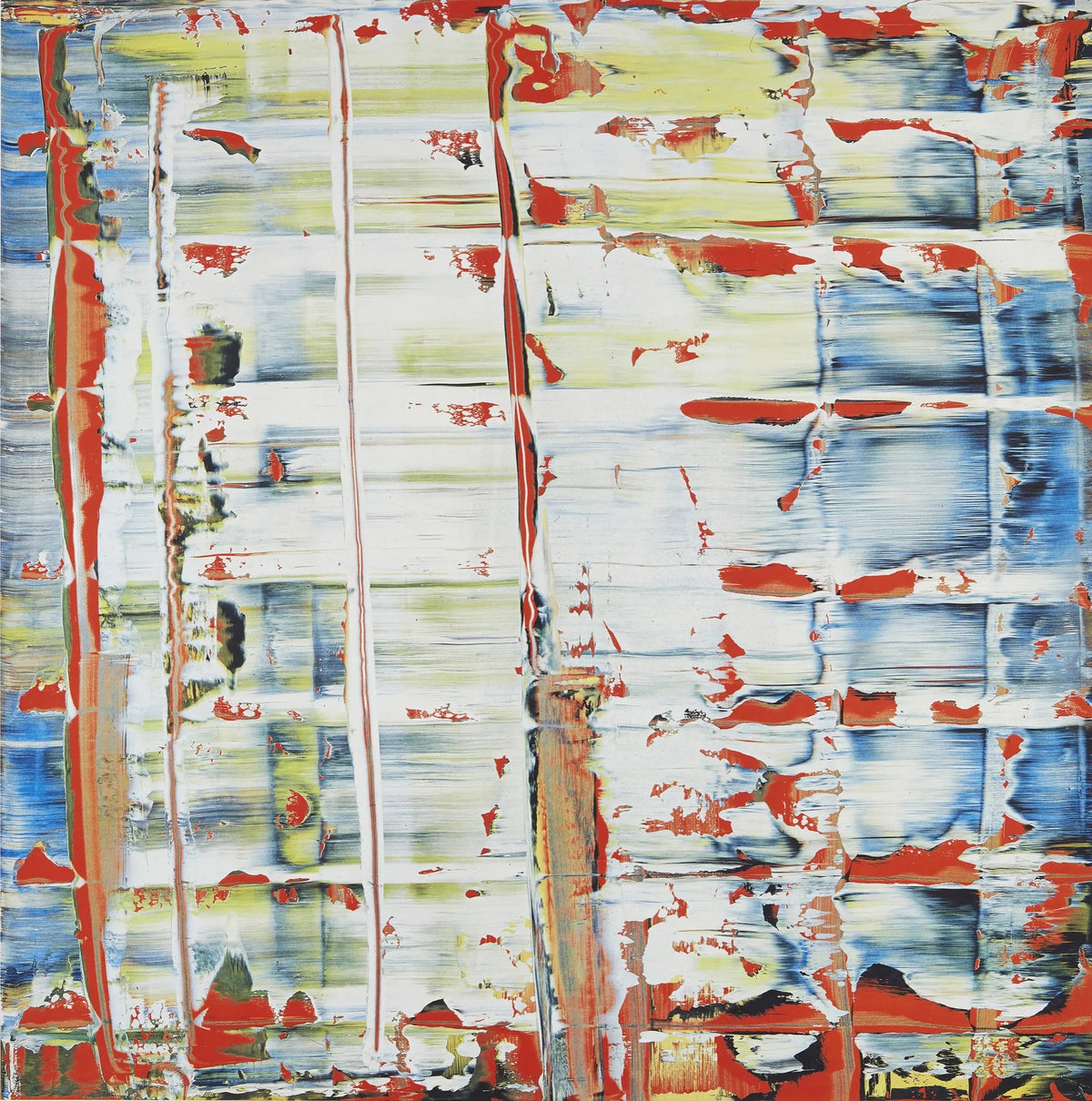
Current examples include Self-portrait, Offset of abstract painting and Victoria II. View the complete Gerhard Richter collection for current availability.
Explore available works by Gerhard Richter
Blur is not one effect
In Richter’s work, blur can suggest movement, faulty focus, memory, distance or the instability of a photographic source. Sometimes it unifies an image; sometimes it prevents a face or event from becoming fully available. It should not be understood simply as softness. The interruption of detail redirects attention to how an image has been selected, transferred and believed.
Blur in reproduction
A deliberately blurred image is especially vulnerable to poor reproduction. Compression, low resolution or weak printing can turn a controlled tonal structure into indistinct greyness. When assessing a print, look at the full tonal range, edge relationships and paper surface in person or through detailed photographs. Verify the medium and edition so an intentional visual decision is not confused with an inferior reproduction.
The viewer’s expectation of a clear image
We usually ask a photograph to make something available: a person, a place, an event or a detail we could not inspect directly. Richter’s softened images frustrate that expectation without completely refusing it. Enough information remains for recognition, but recognition does not produce certainty. A face is still a face; what becomes unstable is the confidence with which we think we have understood it.
This makes blur an active part of the encounter. The eye keeps trying to recover a detail that the image will not supply. Looking takes time, but additional time does not necessarily reveal additional information. That experience differs from solving a puzzle. Instead of concealing a final answer, the work makes the desire for an answer visible.
When approaching Self-portrait, separate the fact that the subject is identified from the impression the image creates. A title can tell you whom you are seeing without resolving the expression or emotional distance of the image. The tension between those forms of knowledge is more useful than treating softness as a ready-made sign of sadness, nostalgia or mystery.
Softness, movement and the passage of time
Different kinds of softened edge lead the eye in different ways. A directional smear can suggest movement across the surface. An even loss of focus can make the whole scene feel inaccessible. A sharply defined area beside a softer one establishes a hierarchy of attention. Before deciding what the image means, describe what kind of edge you are actually looking at.
Memory provides one possible analogy, but it should remain an analogy. We may remember the overall appearance of a person while being unable to reconstruct a specific expression. A softened image can produce a comparable gap between recognition and detail. That does not prove that every blurred Richter illustrates a personal memory. It describes a relationship between the way the picture is made and the way a viewer may experience it.
The same caution applies to emotion. An indistinct image can feel intimate because it resembles something privately remembered; it can also feel remote because it withholds access. Those responses may coexist. A productive reading allows both, rather than forcing the image into a single psychological story about its maker or subject.
How reproduction changes a deliberately uncertain image
Blur does not mean that precision has ceased to matter. A soft image still has a tonal structure: some darks are deeper, some pale passages retain information, and some boundaries are more distinct than others. If a digital file compresses those distinctions, the viewer may mistake a poor reproduction for the work’s intended effect.
For that reason, look beyond a small thumbnail. A full image helps establish the distribution of light and dark, while a detail can show how those transitions appear in the offered print. Where possible, compare photographs made under neutral lighting. A warm lamp, strong reflection or aggressively processed photograph can alter an image that depends on small differences of tone.
It is also important to distinguish a photograph, a print that uses photographic imagery and a reproduction of a painting. They may share an appearance at first glance but have different production histories. MoMA’s record for Richter’s Shadow Picture II, for example, identifies it as a collotype. The museum’s precise medium description is a reminder to identify the particular object rather than infer its process from a screen image.
Blur alongside abstraction and colour
Richter’s blurred figurative images become more interesting when they are considered alongside work that appears very different. A colour chart offers crisp units and an apparently ordered structure, while an abstraction may interrupt or bury one passage beneath another. All three can make the viewer aware that seeing is an activity rather than a simple reception of information.
That does not make the works interchangeable. The colour chart redirects attention towards adjacency and sequence. An abstraction draws attention to a surface whose events cannot be reduced to a familiar subject. A softened portrait retains the promise of an identifiable person while limiting what that identification can provide. The distinctions matter more than a general label such as “uncertainty”.
For a closer comparison, read the study of Richter’s colour charts after looking at the portrait. Notice how differently your eye moves between regular coloured units and an elusive face. The comparison can help clarify what blur contributes to this particular image.
Living with a picture that does not resolve
A work built around softened information may reveal less through a dramatic first impression than through repeated encounters. From across a room, it may register as a simple arrangement of tones. At a closer distance, the refusal of detail becomes more evident. The image can feel familiar without becoming exhausted by familiarity.
When choosing a print, consider whether that sustained ambiguity is what attracts you. Ask for the exact medium, sheet dimensions, edition information and condition details, then assess the visual experience of the actual object. Clear cataloguing and an uncertain image are entirely compatible: the former establishes what you are buying, while the latter remains open to interpretation.
Return to the image after looking away for a few minutes. What do you remember most clearly: the subject, the composition or the sensation of withheld detail? The difference can reveal how the work holds attention. A picture that is visually softened may leave a surprisingly definite memory, while its individual features remain difficult to describe.

Leave a comment
This site is protected by hCaptcha and the hCaptcha Privacy Policy and Terms of Service apply.