
How to assess format, condition and provenance.
Original works, prints, editions, books, posters and authorised products must be clearly distinguished.

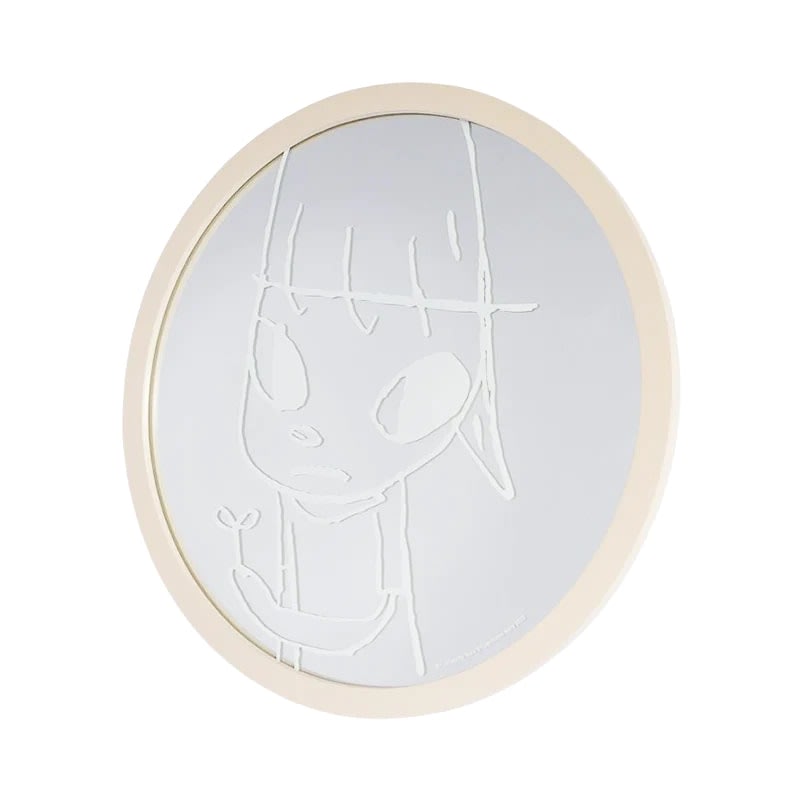
Selected work: Sprout in the hand mirror.
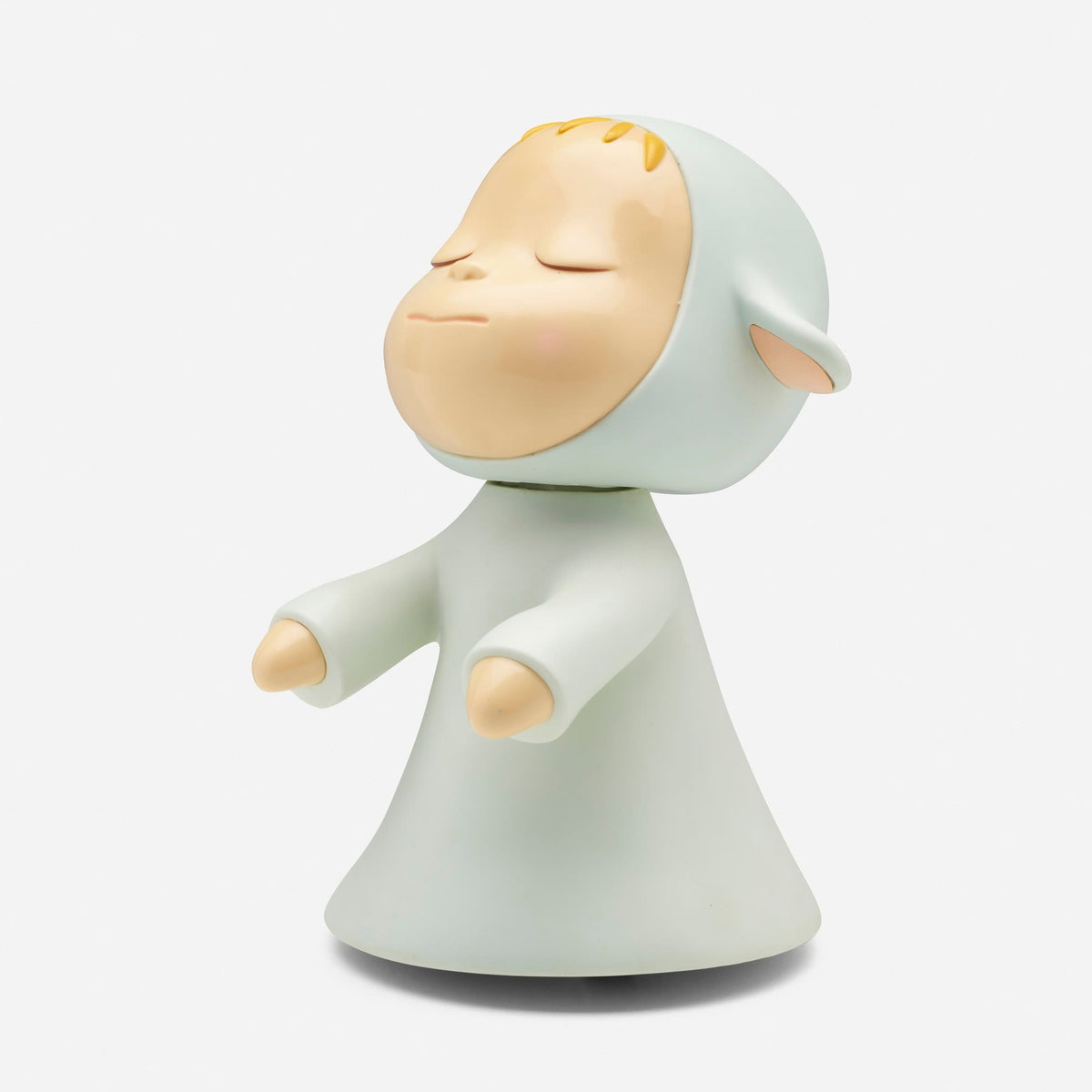
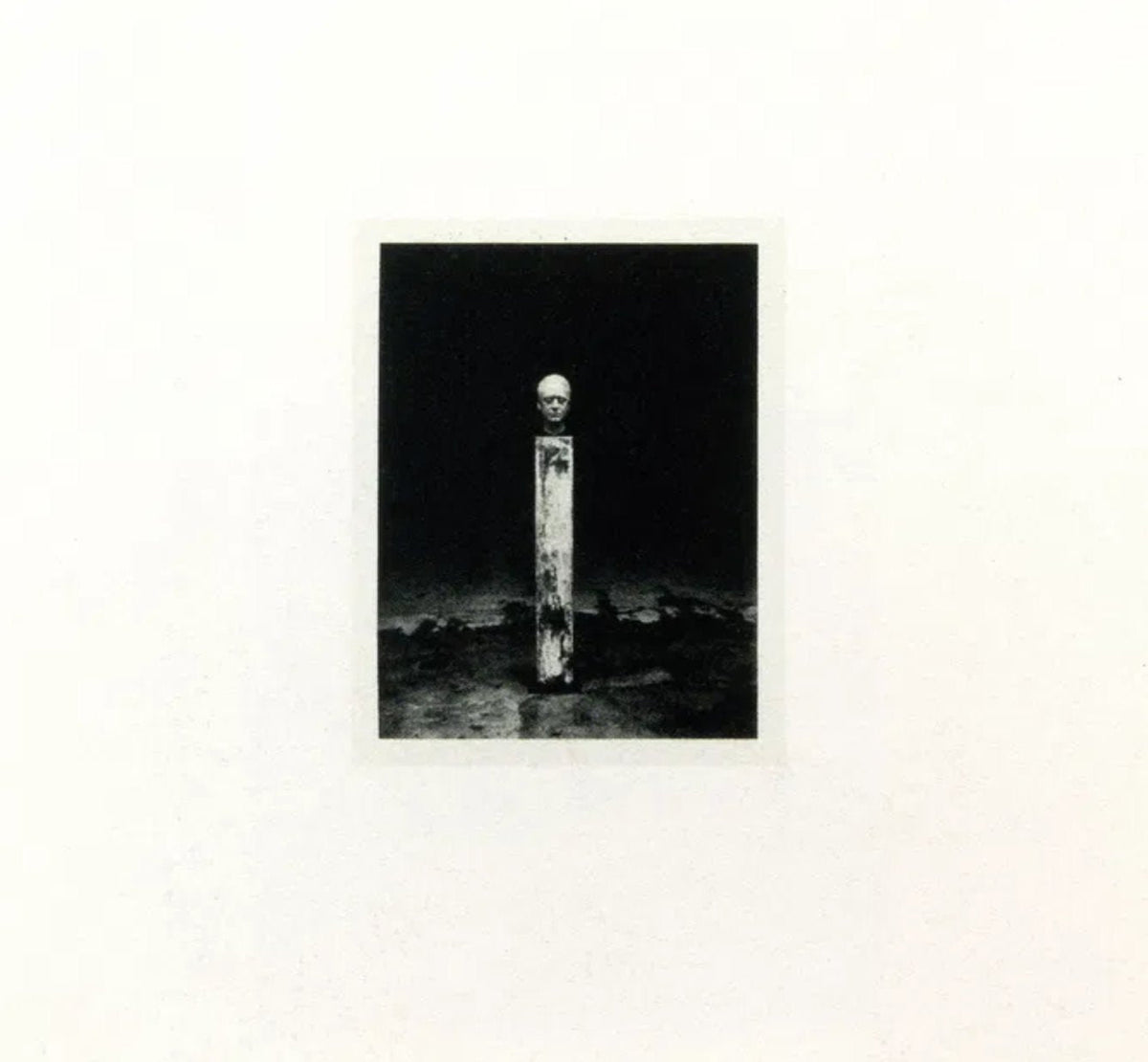
Current examples include Sprout in the hand mirror, Untitled (Schrödinger) and Mini Mori Girl. View the complete Yoshitomo Nara collection for current availability.
Explore available works by Yoshitomo Nara
Build a collection through relationships
A coherent Nara collection need not chase only the most famous face. Prints can be grouped around music, solitary figures, animals or shifts in scale and technique. A sculptural multiple may create a productive contrast with a work on paper by turning a familiar outline into an object. The strongest group reveals how a motif changes rather than simply repeating it.
Documentation and condition
Ask for the exact medium, dimensions, date, edition, signature and publisher or fabricator where recorded. Provenance should connect to the particular object, not merely to an image with the same title. For prints, examine paper tone, colour and handling; for sculpture, inspect joins, bases, coatings and any restoration. Original packaging can be relevant to safe storage but does not replace a condition report.
Do not let a familiar face decide the category
Nara's imagery travels across paintings, drawings, paper publications and objects. A website thumbnail can make these formats appear deceptively similar. Before comparing offers, write down the complete medium and dimensions. Establish whether the work is a unique object, a numbered edition, an open edition, a poster or another authorised publication. These descriptions are not interchangeable, even when the same character or title appears in more than one context.
For example, Dovehouse records Mini Mori Girl as a resin, wood and plastic sculpture in an edition of 1,000. Little Wanderer is described as an open-edition plastic object with a stamped signature. Cosmic Girl is a pair of offset lithographic posters. A useful collection can include all these categories, provided each is represented accurately.
Edition size and signing are separate facts
A limited edition does not automatically mean a work was individually signed by hand. An open edition may carry a publisher's mark or stamped signature as part of its normal production. Ask what is physically present and how it was applied. If the description says signed, request clarification where the method is not stated. The answer should match the object's documented publication, not a general expectation about the artist.
An unknown production total should remain unknown unless reliable evidence establishes it. A seller's difficulty finding comparable examples does not prove a small edition. Similarly, original packaging can support identification without turning an open-edition object into a limited one. The aim is not to rank formats automatically, but to prevent the language of scarcity from replacing an accurate account of the object.
Inspect paper publications as complete objects
For works on paper, distinguish sheet size from image size and from the visible opening of a frame. Ask about trimming, mounting, paper tone and colour. Sparse compositions can make a small mark in the surrounding field unusually conspicuous, while a dark contour may conceal a minor surface issue in an overall photograph. A useful condition report describes both the image and the support.
When a publication consists of two sheets, confirm that the offer includes the complete pair and that both have been examined. Different exposure or framing histories can leave the components with different appearances. Keep any original folder, title page or publication information associated with the correct works. Such material can explain context, but it should not be described as part of the artwork unless that is how the edition was issued.
Objects require views from every side
Sculptural multiples should be photographed from the front, rear, sides and underside. Look at the base, projecting elements and any joins. Ask about scratches, chips, colour changes, repairs and stability. A glossy surface may reflect the lighting strongly enough to hide an abrasion, so consistent photographs from several angles are more informative than one dramatic image.
Materials also affect handling. A work described as glass and wood presents different practical considerations from a plastic figure or a resin sculpture. The Sprout in the Hand Mirror entry, for example, identifies glass and wood and gives a diameter of 37 centimetres. Its installation and transport should be considered in relation to those actual materials rather than to a generic idea of a Nara collectible.
Build provenance around the specific example
Ask what documentation follows the individual object: invoices, publisher information, earlier ownership records or other relevant material. The history of an image is not the same as the history of the example being offered. A museum exhibition featuring related imagery does not mean this particular sheet or object was exhibited. Descriptions should make that distinction clear.
Keep the evidence in the form in which it is supplied. Photograph labels and inscriptions, retain correspondence that clarifies edition details and ensure the final invoice agrees with the accepted description. If a fact remains uncertain, record the uncertainty. A carefully maintained file is more useful than an impressive-sounding provenance summary that cannot be traced back to documents.
Choose through expression and medium together
A collection might follow guarded faces, solitary animals, music-related imagery or the movement from line to volume. Compare how each format changes those themes. Does a small paper image feel private, while a sculptural figure occupies the room more insistently? Does an open background intensify the gaze? Does a shift of material make a familiar character feel less familiar?
These questions give collecting a purpose beyond accumulating recognisable motifs. They also help explain a preference in concrete terms. The object that suits your collection is not necessarily the largest, rarest-sounding or most immediately familiar one. It is the work whose accurately understood format and particular visual presence make a convincing contribution to the group you are building.
Agree the complete offer
Before payment, confirm whether the quoted amount includes framing, packaging and delivery, and ask which documents will accompany the work. For a pair or set, list every component on the invoice. These practical details prevent a visually appealing shortlist from becoming an ambiguous transaction and give you a clear record of what the gallery has agreed to supply.

Leave a comment
This site is protected by hCaptcha and the hCaptcha Privacy Policy and Terms of Service apply.