
Why these landscapes feel experienced rather than simply observed.
Roads bend, fields tilt and seasons become structural devices in images built from accumulated looking.

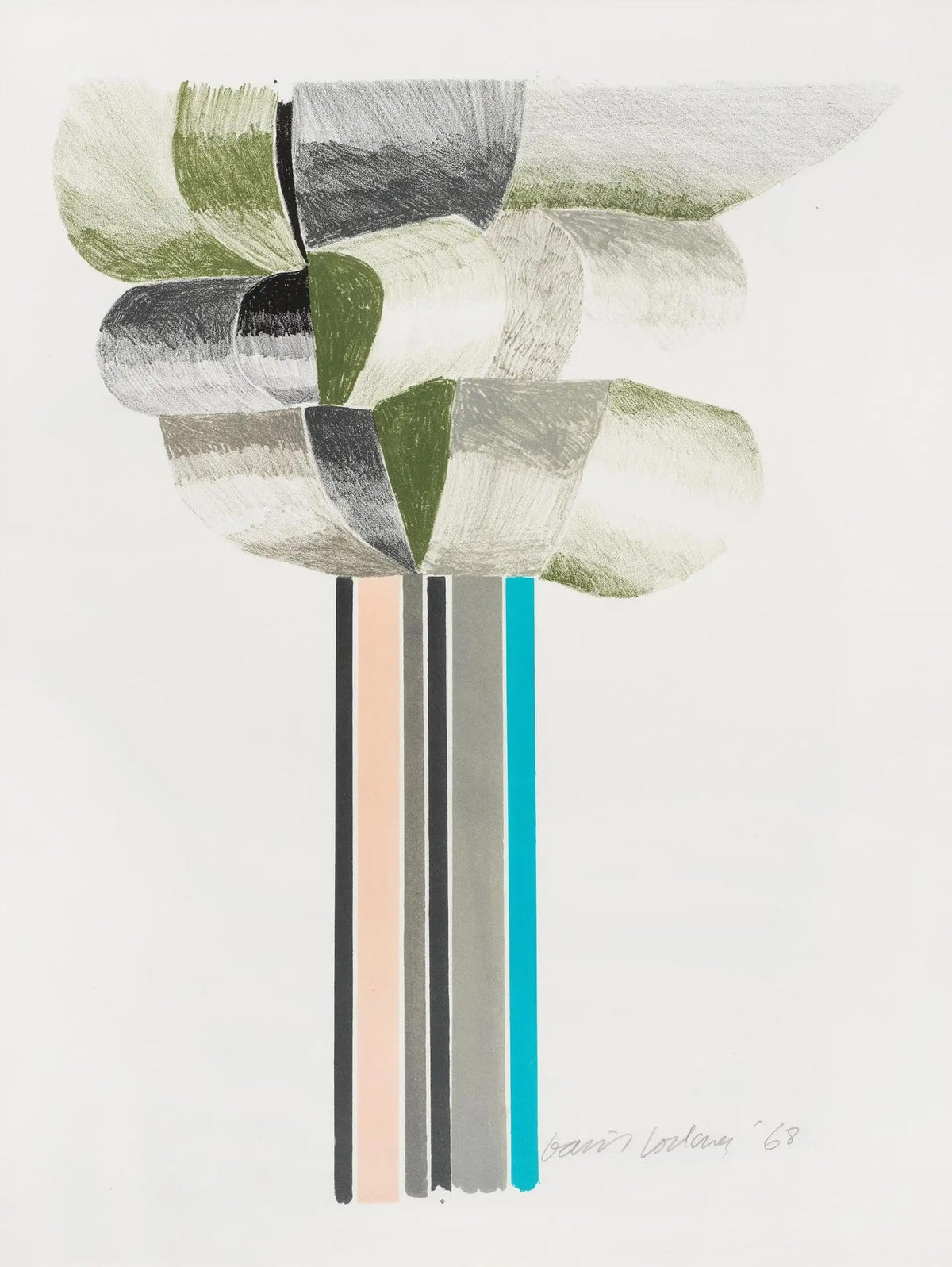
Selected work: Trees.
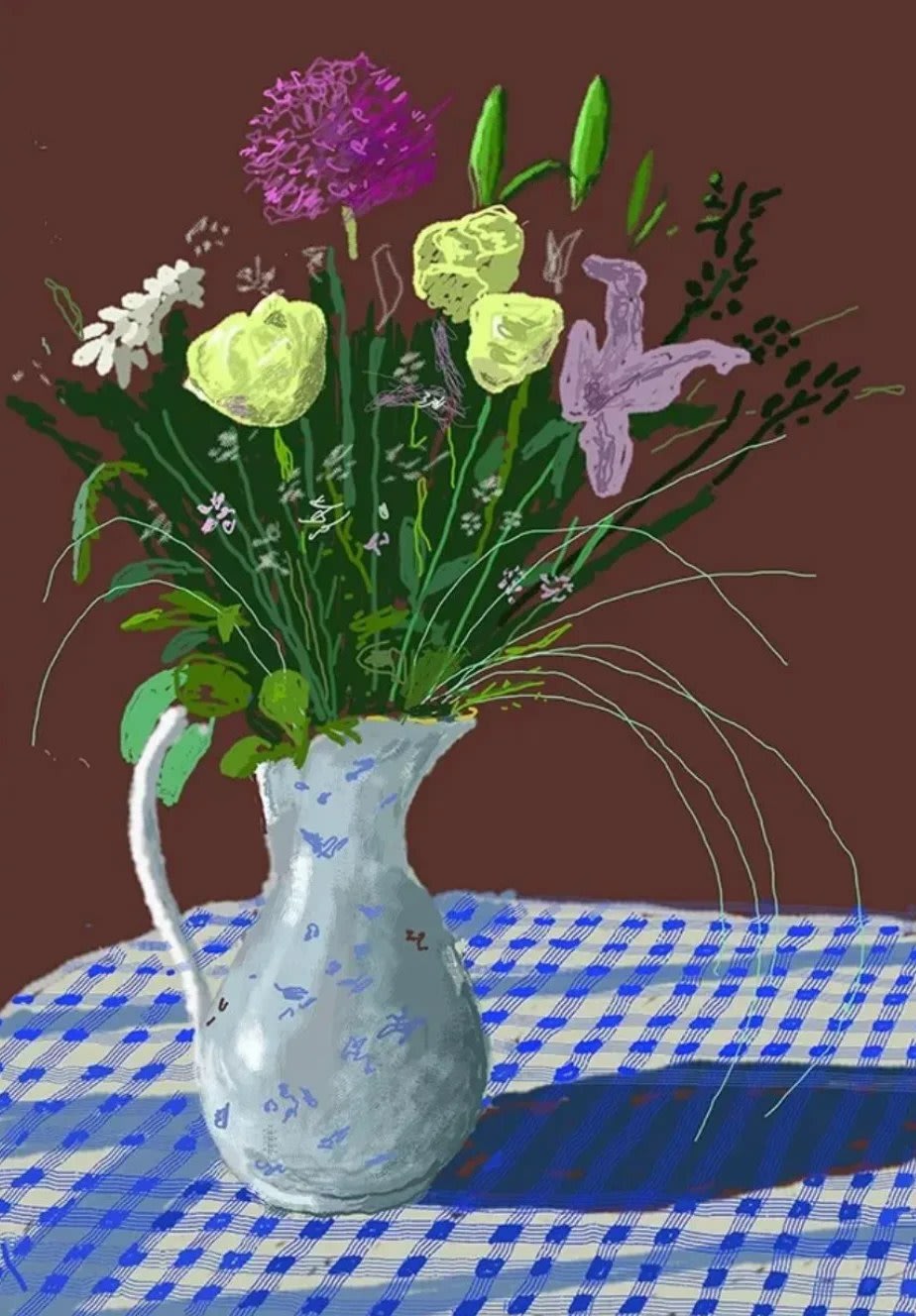
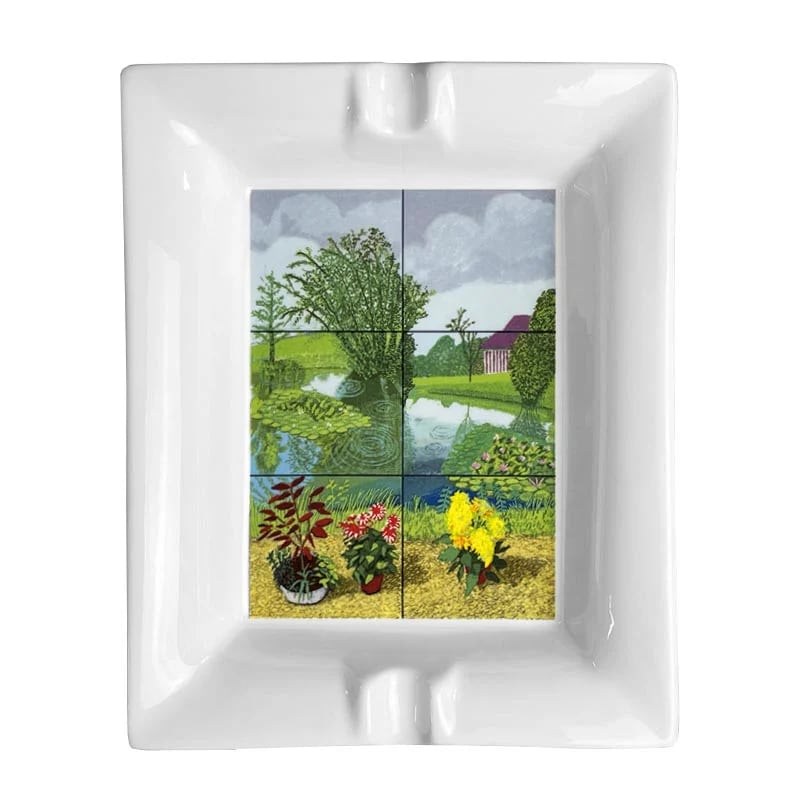
Current examples include 4th February 2021, Flowers in a White Vase with Chair, 2008 (detail) ashtray and Walking, June. View the complete David Hockney collection for current availability.
Explore available works by David Hockney
A landscape travelled through
Hockney’s roads and paths pull the eye into the image, yet conventional single-point perspective rarely settles the view. Curves, tilted fields and compressed distances suggest movement through a place rather than observation from one fixed position. The landscape becomes an accumulation of looking, memory and travel.
Season as structure
Changing seasons alter more than palette. Bare branches reveal drawing, spring growth thickens space and summer colour can flatten fields into broad shapes. In editions, check that colour remains balanced and that paper has not been compromised by light or poor mounting. Exact date and medium matter because related locations may recur across distinct series and technologies.
The road as a way of organising experience
A road gives a landscape an apparent route. We expect it to narrow as it recedes and to lead towards a destination beyond the frame. Hockney can use that expectation while allowing the route to bend, widen or change direction in ways that keep the eye moving across the picture. The experience resembles following a path rather than measuring a view from a fixed position.
This distinction matters because a landscape can be known through repeated journeys. A turn in a road may be remembered differently from a distant field; a group of trees may become important because it marks a familiar stage of the walk. A picture that gives those features different emphases can express an experience of the place without reproducing a single photographic viewpoint.
When looking at a landscape, trace the route with your eye. Where do you slow down? Does the path disappear, or does another line continue its movement? The branches of a tree, the edge of a field and the curve of a hill can all carry the movement onwards. The composition becomes a network of transitions rather than a window with a single centre.
Trees turn space into drawing
In Trees, the subject invites attention to the relation between branching forms and the surrounding space. A tree can be understood as a solid object, but its branches also create a pattern of intervals. Looking at the gaps between them can be as revealing as following the branches themselves. The empty areas participate in the drawing.
Dovehouse’s listing identifies Trees as a signed lithograph dated 1968, with a recorded edition of 95. Those details locate the offered work within a particular printmaking context. They also distinguish it from later landscape publications or digital works whose images may appear alongside it in an online search. The visual comparison is useful precisely because the objects are not identical in process or date.
A group of trees can also interrupt conventional depth. Repeated trunks may form a screen across the image, allowing only partial access to what lies beyond. Branches can draw the eye sideways when a road seems to pull it forwards. These competing movements make the landscape feel occupied by the viewer’s attention rather than simply spread out for inspection.
Season changes the available shapes
Winter and summer offer different structures to an artist. Bare branches make linear relationships conspicuous; leaves replace some of those intervals with denser masses. Changes in ground cover can reveal or conceal the edges of fields. Colour is therefore only one part of the seasonal transformation. The organisation of the entire picture can change with it.
Hockney’s A Year in Normandie, dated 2020–2021, was presented at Serpentine in 2026 alongside newer paintings. The institution describes the frieze as a composite iPad painting and also documented a large printed garden mural drawn from its spring cycle. The exhibition record offers a concrete example of seasonal observation being developed through both digital drawing and physical presentation.
The broader lesson is to treat a recurring place as a changing subject. The same location does not guarantee the same image. Light, growth, viewpoint and the artist’s attention can reorganise it. Comparing related views becomes a way of noticing those decisions, rather than simply identifying a recognisable landscape.
Walking, sequence and the print
The title Walking, June connects movement with a particular time. Its current catalogue description identifies a 1986 Home Made print produced in three colours using an office copy machine. The example is useful here because it links a subject of movement to a printing method that differs from both lithography and a later digital output.
A print fixes its marks, but the viewer still experiences them in sequence. The eye moves between separate incidents and joins them into a whole. In a landscape, that sequence may echo travel through a place; in a serial work, it can also connect one sheet to another. Neither kind of movement depends on the image imitating a film or an uninterrupted panoramic photograph.
For a collection, ask whether you are drawn to the particular place, the construction of space or the printing process. Those interests can overlap, but identifying the strongest one helps make a shortlist more coherent. A group of landscape works may be connected by a way of seeing rather than by a shared location.
Let the physical size inform the choice
A landscape that looks expansive on a screen may be quite intimate as a sheet of paper. Conversely, a large print may require room for the viewer to step back before its structure becomes clear. Check image, sheet and frame dimensions separately. A product photograph is an illustration of the object, not a reliable guide to its physical scale.
Compare full-sheet and detail photographs, and consider how glare or a heavy mount might affect the image. The line of a branch, a narrow interval of colour or a quiet area of paper can be important to the spatial balance. Clear presentation allows those relationships to remain visible and gives the landscape room to be encountered repeatedly.
Compare the intervals between trees
In a tree-filled composition, look at the spaces between trunks before concentrating on the trunks themselves. Those openings establish rhythm and suggest how far the eye can travel. A narrow sliver of sky can feel as active as a brightly coloured field. Following these intervals is especially useful when comparing a sparse landscape with a dense seasonal image: it shows how Hockney can suggest a different pace of movement without needing to describe every leaf.

Leave a comment
This site is protected by hCaptcha and the hCaptcha Privacy Policy and Terms of Service apply.