
What collectors should look for across a varied editioned practice.
Original prints, authorised editions, exhibition posters and later objects require careful distinction.

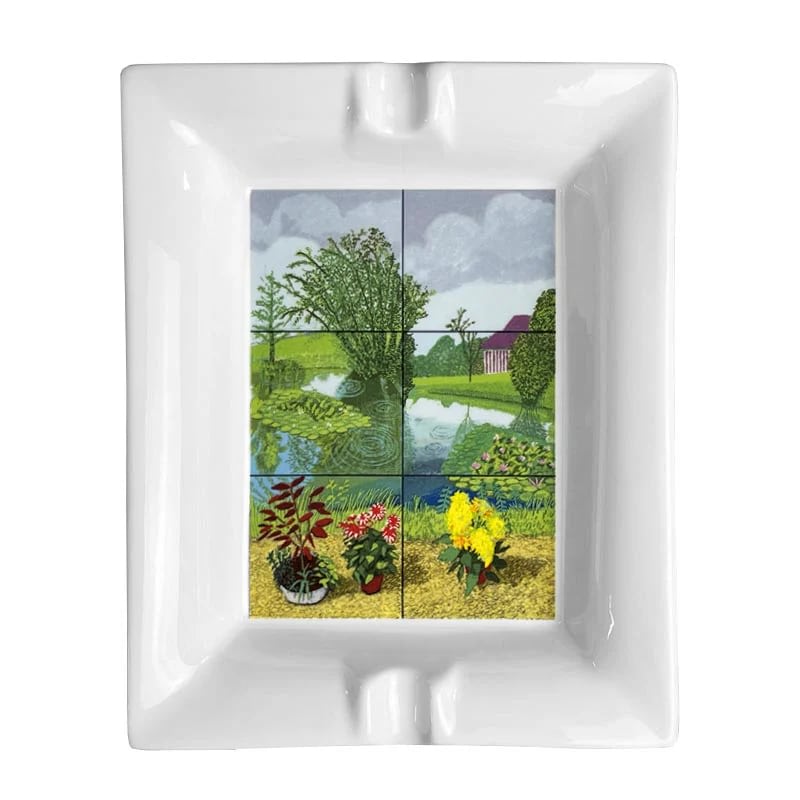
Selected work: Water Lilies in the Pond with Pots of Flowers (ashtray).
Current examples include Water Lilies in the Pond with Pots of Flowers (ashtray), Hockney's Pool, Hollywood Hills (ashtray) and Royal Academy Exhibition Posters (4). View the complete David Hockney collection for current availability.
Explore available works by David Hockney
Range before hierarchy
Hockney’s graphic work includes etching, lithography, photographic projects and digital editions. Each process answers a different visual problem, so collecting should not be reduced to finding the most familiar pool or portrait. A group can be built around line, colour, serial narrative, landscape or the artist’s adoption of new technologies.
Compare complete specifications
Establish title, date, technique, sheet and image dimensions, edition, signature, printer and publisher. Some images also appear in books, posters or later publications, which can be desirable but should be described accurately. Examine paper tone, margins, colour, embossing and any conservation. Documentation should relate to the specific impression.
Build a shortlist around a clear interest
Hockney’s range makes a clear starting question especially useful. Do you want to follow his drawing, compare printing methods, concentrate on landscapes or live with a particular still-life image? A collection does not need to represent every period. It benefits from a reason why the selected works belong together.
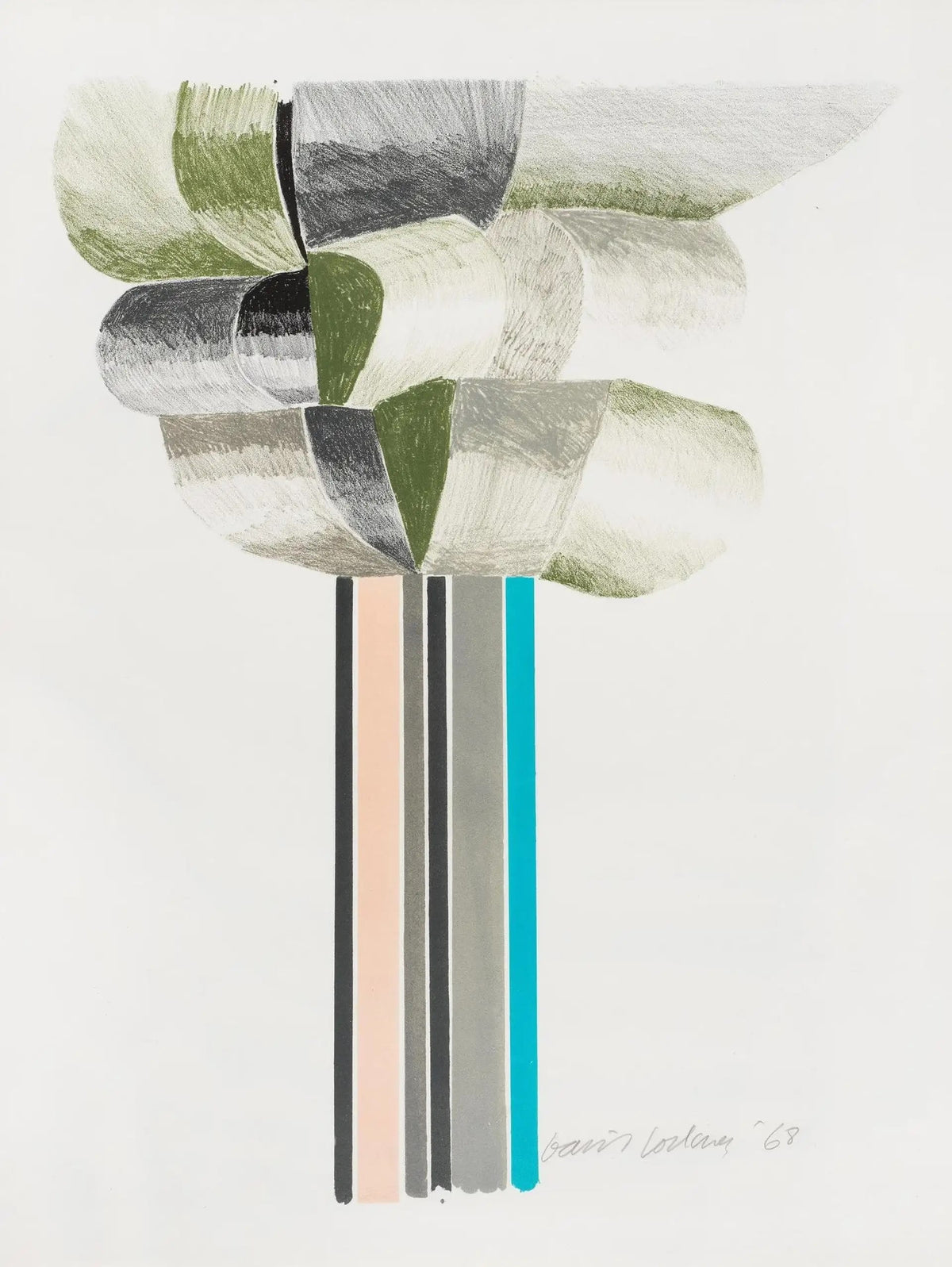
A process-led shortlist might compare Trees, catalogued as a 1968 lithograph, with Walking, June, described as a Home Made print produced with an office copy machine. An interest in recent still life might instead lead towards Jug With Flowers, an iPad painting printed on paper. Each route raises different questions without requiring one medium to be treated as the universal benchmark.
The purpose of the shortlist is to make comparison more precise. A familiar subject can appear in different publications, while less familiar imagery may be central to the artist’s printmaking. Decide what draws you to the object before allowing a famous title or motif to settle the choice.
Separate original printmaking from other authorised formats
The word “print” can be used loosely in everyday conversation. In a catalogue, the description should be more exact. A work conceived through a printmaking process, a printed digital drawing, an exhibition poster and an illustrated publication have different production histories. An authorised object carrying an image belongs to another format again.
The distinction is particularly important when browsing a broad gallery collection that includes posters and objects such as the Hockney ashtrays shown above. These may be interesting examples of an image’s circulation and design, but they should not be described as signed works on paper unless the particular object and evidence support that description.
Read the medium, publisher or manufacturer, date and edition information together. A familiar image does not independently establish artist involvement in the production of every object that uses it. Ask for clarification where the description is broad or where two listings appear to apply different terminology to similar images.
A signature on a publication is not necessarily on each sheet
Some prints are signed directly on the sheet; some publications carry a signature on a justification or colophon page. Those arrangements should be described separately. If a sheet has been removed from a signed publication, the presence of a reproduced or copied justification page does not place an original signature on the individual sheet.
The current Dovehouse descriptions for D and K from Hockney’s Alphabet explicitly locate the artist’s and editor’s signatures on the justification page and state that a copy accompanies the artwork. That wording is more informative than a simple label saying “signed”. It tells the buyer what evidence accompanies the particular sheet.
Apply the same precision to numbering, stamps and inscriptions. Ask where they appear and request photographs when they affect the identity or price of the work. A clear record reduces the risk of confusing publication-level information with marks physically present on the offered object.
Compare the paper object at its actual scale
Image size, sheet size and frame size answer different questions. The image measurement describes the printed area, the sheet measurement establishes the complete paper object, and the frame determines its footprint on a wall. A listing should make clear which is being given. Do not estimate size from a photograph presented in a standard website grid.
Margins can be important to the way a print feels. A small image surrounded by paper creates a different encounter from an edge-to-edge composition. Ask whether the sheet has been trimmed or mounted, and whether a frame conceals areas that have not been inspected. A full-sheet photograph is especially useful when comparing related impressions.
Condition should be discussed specifically: paper tone, handling marks, creases, colour changes, surface disturbance and any recorded treatment. The relevance of a mark depends on its location and extent. A concise condition description with supporting images is more helpful than relying entirely on a general grade.
Make publication history part of the enjoyment
Learning how a work was made can deepen the visual encounter. The recorded use of a copier in Walking, June prompts attention to colour and repetition. A lithograph invites a different consideration of line and surface. A digital drawing printed on paper raises questions about the move from an illuminated screen to a fixed physical object.
Keep the catalogue description, invoice, photographs and relevant correspondence together. If the work belongs to a portfolio or publication, preserve the accompanying documentation and record exactly what is included. Future framing or conservation information should be added to the same file.
A considered Hockney collection combines curiosity about the image with precision about the object. Neither replaces the other. The specifications establish what you are acquiring; the pleasure of returning to its colour, space and drawn decisions is what gives it a continuing place in the collection.
Plan how the work will live with you
Before choosing between editions, measure the intended wall and consider the distance from which you will usually see the image. A small, finely drawn sheet invites close viewing; a larger field of digital colour may organise an entire room. Include the mount and frame in those measurements. Ask for a photograph showing the complete sheet and a separate installation view with reliable dimensions, so that a striking online thumbnail does not become your only guide to scale.

Leave a comment
This site is protected by hCaptcha and the hCaptcha Privacy Policy and Terms of Service apply.