
How still life became one of Hockney’s most personal recurring subjects.
Flowers connect daily observation with experiments in colour, transparency and domestic space.

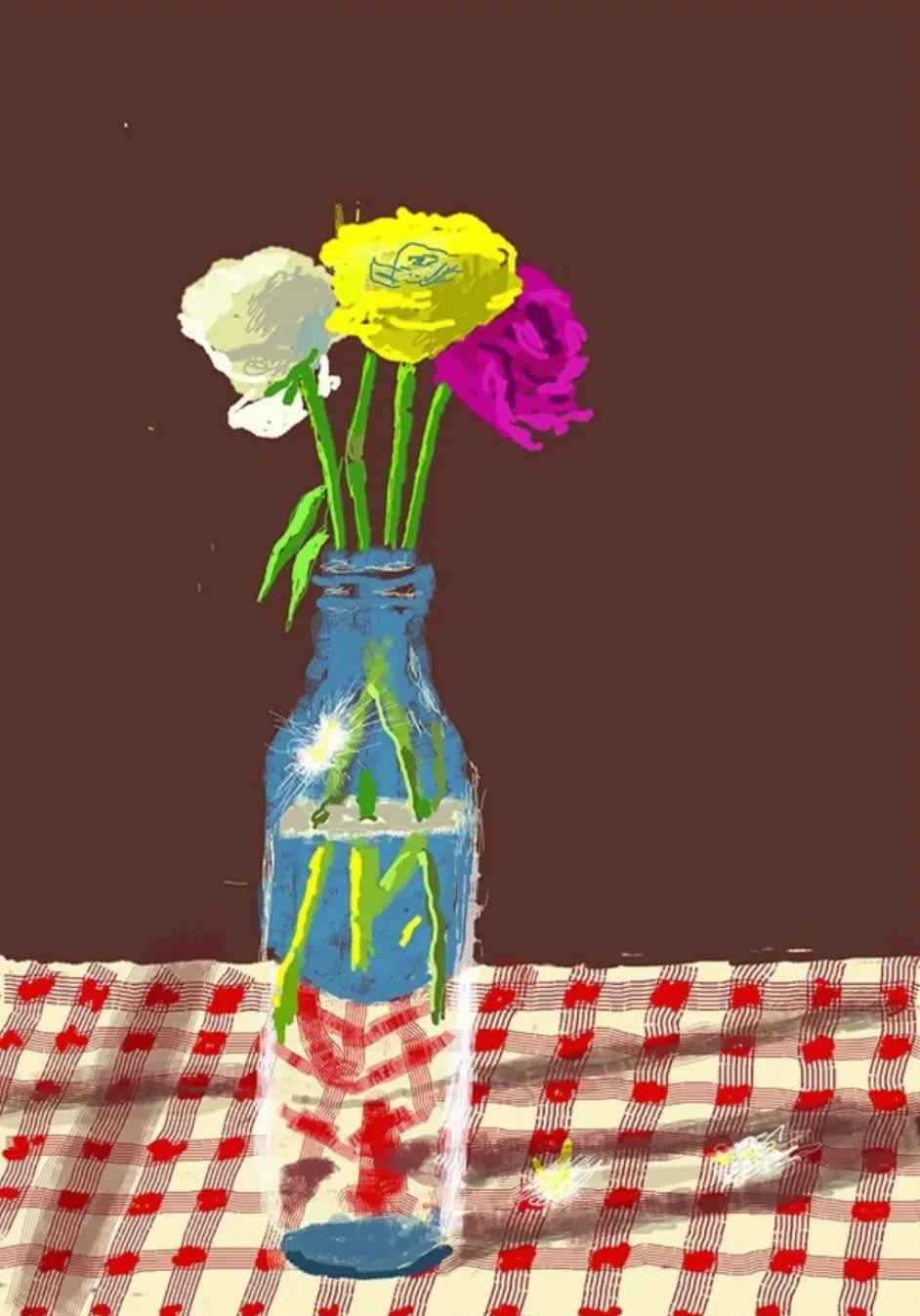
Selected work: 23rd March 2021, Flowers in a Milk Bottle.
Current examples include 23rd March 2021, Flowers in a Milk Bottle, 4th February 2021, Flowers in a White Vase with Chair and 2008 (detail) ashtray. View the complete David Hockney collection for current availability.
Explore available works by David Hockney
A traditional subject made immediate
Flowers connect Hockney to still-life traditions, but his arrangements often feel observed in the present tense. A stem leaning, a glass catching light or a bloom pressing against the edge can establish the whole composition. Colour supplies structure as much as description, preventing the everyday subject from becoming merely decorative.
Repetition as renewed attention
Returning to flowers allows Hockney to test different media and ways of seeing. A drawn, printed or digitally made bouquet is not interchangeable: each records a different relation between hand, tool and time. Collectors should identify the exact process, date and edition, then assess colour, paper or screen surface and the quality of the particular impression.
The container is part of the subject
A flower arrangement is never only a group of blooms. The container establishes a base, the tabletop places it in a room, and the surrounding space controls how the stems spread. Hockney’s still lifes can make those apparently secondary elements unusually active. A jug or milk bottle is both an ordinary household object and a shape around which the picture is organised.
Compare the titles Flowers in a Milk Bottle and Flowers in a White Vase with Chair. Each directs attention beyond the flowers themselves. One names an everyday container; the other introduces furniture and therefore a larger domestic space. Before concentrating on colour, look at how those named objects give the arrangement its setting.
The bottle, vase or jug also creates a contrast between relatively stable form and irregular growth. A container can have a firm outline while the stems cross, lean and separate. The eye moves between those different kinds of organisation. The balance need not be symmetrical to feel convincing.
Colour can hold a room together
In a still life, colour does more than identify a flower. A bright passage can connect with another part of the room; a quieter background can allow a thin stem to become visible. A strong contrast may establish the edge of a vessel more clearly than a carefully modelled shadow. The image can feel spatial even when its colours remain emphatically flat.
Try looking first at the spaces between the flowers. Their shapes help determine whether the arrangement feels crowded, open, upright or dispersed. Then follow the colour across the whole composition. Does a colour recur in the container, furniture or background? Those returns can create a rhythm that is easier to overlook when attention stays only on the blooms.
This is why the familiar subject can sustain repeated looking. The first impression may be cheerful or intimate, but the painting’s structure is not exhausted by that response. An apparently simple vase of flowers can contain a complicated negotiation between flat colour, drawn line and the suggestion of depth.
The date makes a still life feel particular
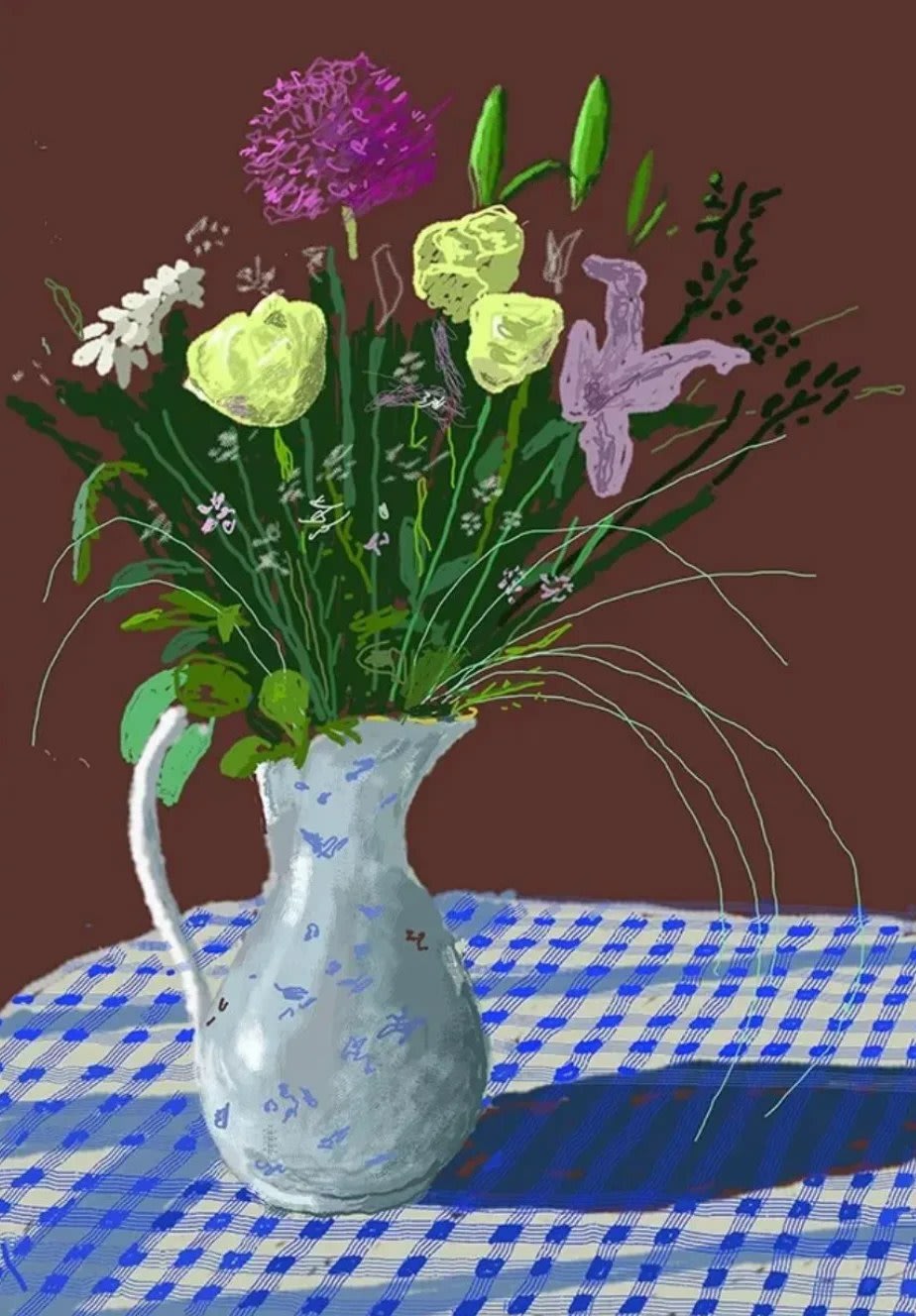
A title such as 20th February 2021, Jug With Flowers attaches the image to a particular day. It invites the viewer to think about attention occurring in time: a specific arrangement looked at under particular conditions. That sense of occasion differs from a timeless botanical illustration or a generic floral design.
The date should still be read carefully as catalogue information. A date in an image title can describe the original drawing, while the publication details establish the object being offered. In the current Dovehouse listing, Jug With Flowers is described as an iPad painting printed on paper. The image’s digital origin and its physical printed form are both relevant to understanding it.
The relationship between a fleeting subject and a durable image is especially appealing. Flowers alter as they open, lean and fade; a print preserves the artist’s chosen arrangement. The work does not preserve the flowers themselves. It preserves a way of attending to them.
A digital mark can remain personal
There is no reason to assume that a drawing made on a screen is less attentive than one made with ink or pencil. Different tools offer different kinds of resistance, colour and revision. What matters to the viewer is how those possibilities are used: the economy of a line, the placement of a colour and the relationship between marks.
An iPad image can appear immediate because its strokes remain legible, but immediacy is not the same as absence of thought. A decisive contour can describe the turn of a vessel; a compact group of marks can suggest a bloom without cataloguing every petal. The picture asks the viewer to participate in recognition.
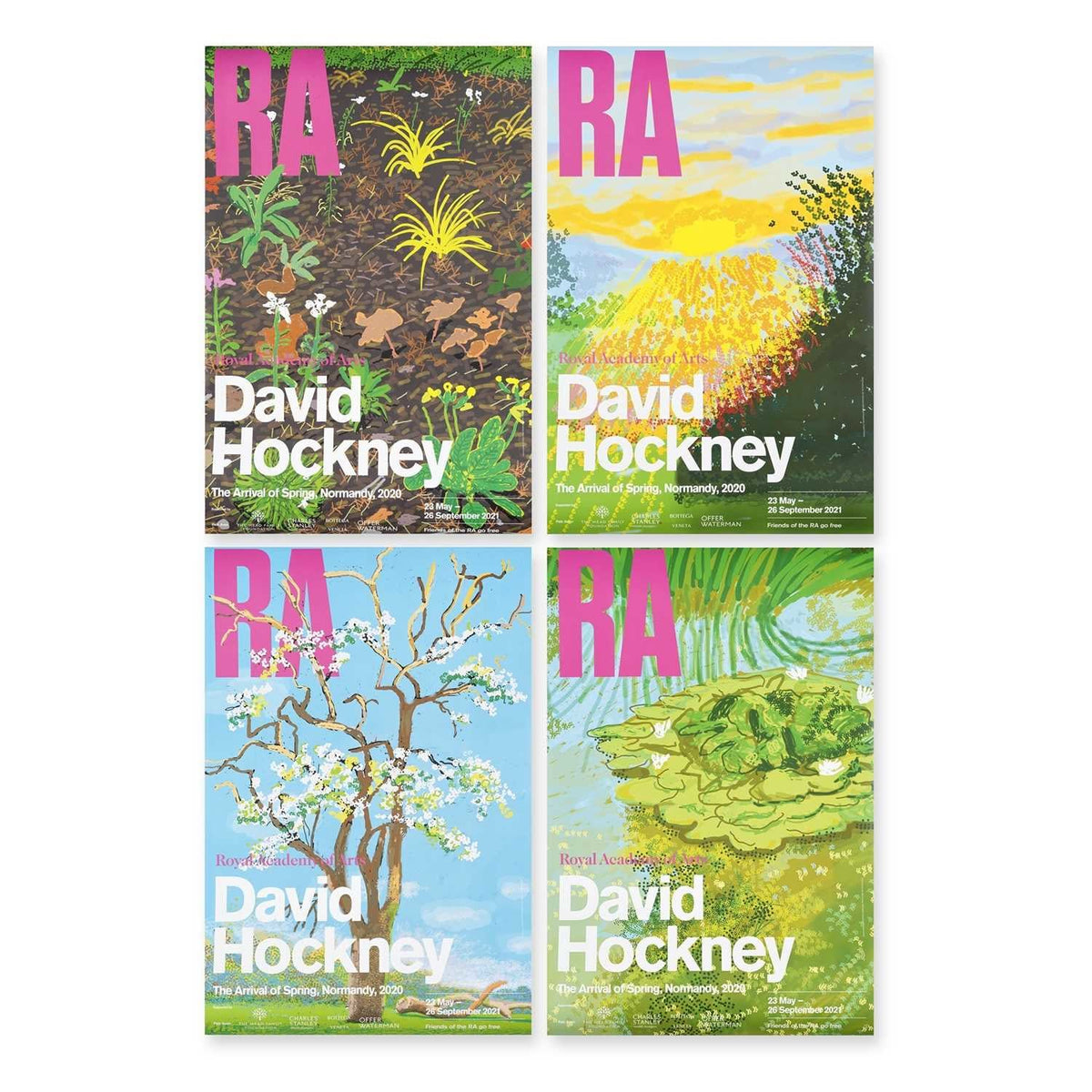
When the drawing becomes a print, paper, size and output process add another material stage. Establish those details in the individual listing. A printed digital drawing, an exhibition poster using the image and a licensed object decorated with it should not be treated as interchangeable simply because the motif is familiar.
Choosing a flower image for sustained attention
A useful choice begins with the composition you want to revisit, rather than with a general wish for something colourful. Some arrangements are compact and frontal; others open into a larger interior. A chair, table edge or patterned background may be as important to your response as the flowers. Consider the complete image before choosing a frame or deciding where it will hang.
Check the actual dimensions and ask for photographs that show the full sheet. A generous margin can contribute to the feeling of space around the image. Cropping the photograph tightly around the printed area may conceal that relationship. For an already framed work, establish what the mount covers and what has been inspected.
Placed thoughtfully, a flower work can offer both an immediate welcome and a slower study of colour and construction. Its domestic subject is not a limitation on its ambition. It is the familiar point from which Hockney can make the act of looking newly visible.

Leave a comment
This site is protected by hCaptcha and the hCaptcha Privacy Policy and Terms of Service apply.