
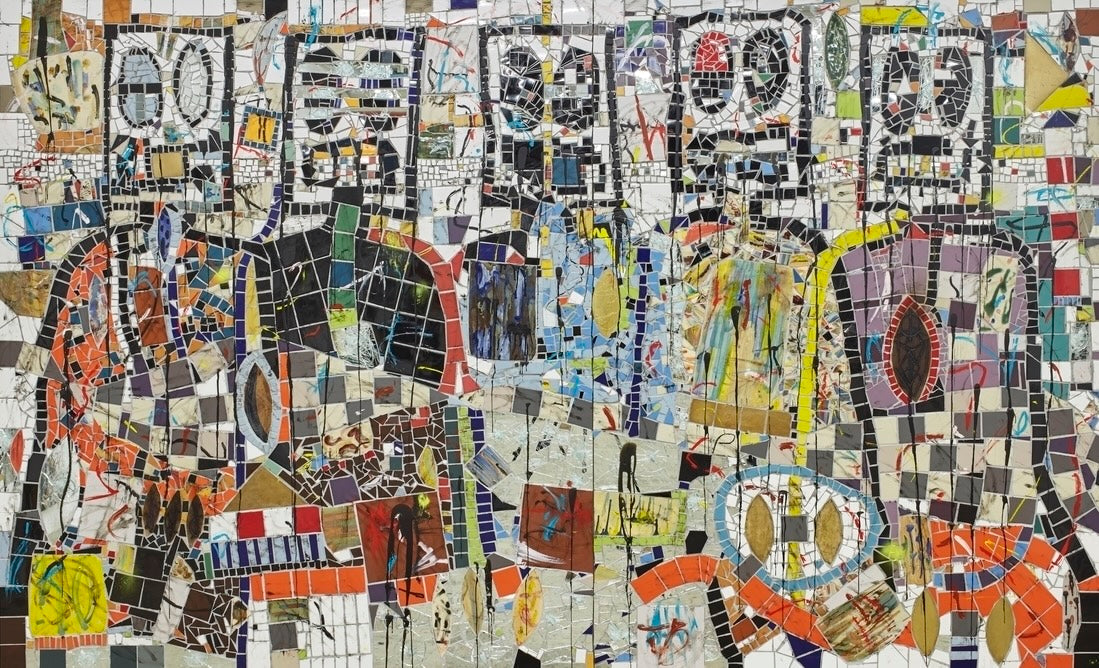
Rashid Johnson’s A Poem for Deep Thinkers at the Solomon R. Guggenheim Museum in New York brought his work across photography, painting, sculpture and installation into an extensive exhibition. The New York presentation has now closed. This article looks back at the questions it raised about materials, identity, memory and the relationship between an individual artwork and the environment in which it is encountered.
A Journey Through Rashid Johnson's Artistic Evolution
Rashid Johnson's career has been marked by a relentless pursuit of cultural exploration and identity. Born in Chicago in 1977, Johnson's work often intertwines personal narrative with broader social commentary, reflecting on themes of race, history, and collective memory. His exploration of identity is deeply rooted in his own experiences as an African-American artist, navigating the complexities of cultural heritage and societal expectations.
In context
At the Guggenheim, Johnson's retrospective brought works from different stages of his practice into a shared exhibition context. Each piece serves as a chapter in Johnson's artistic evolution, inviting viewers to delve into the layers of meaning and symbolism that characterize his oeuvre.
The Intersection of Mediums: Painting, Sculpture, and Mixed Media
One of the defining aspects of Rashid Johnson's artistry is his mastery of multiple mediums. From large-scale paintings that blend abstraction with figurative elements to intricate sculptures constructed from everyday materials like wood, ceramic, and shea butter, Johnson's works challenge traditional boundaries and invite viewers to reconsider the nature of art itself.
In his exploration of materials, Johnson often incorporates items loaded with cultural significance, such as books, mirrors, and plants. These elements not only serve as aesthetic components but also as symbols that resonate with themes of history, identity, and the African diaspora. For Johnson, the act of creation is a dialogue-an ongoing conversation between the artist, his materials, and the audience.
Themes of Identity and Representation
Central to Rashid Johnson's work is a critical examination of identity and representation. Through his art, Johnson confronts stereotypes and challenges conventional narratives surrounding African-American culture. His pieces are imbued with a sense of urgency, addressing issues of race and social justice while celebrating the resilience and creativity of marginalized communities.
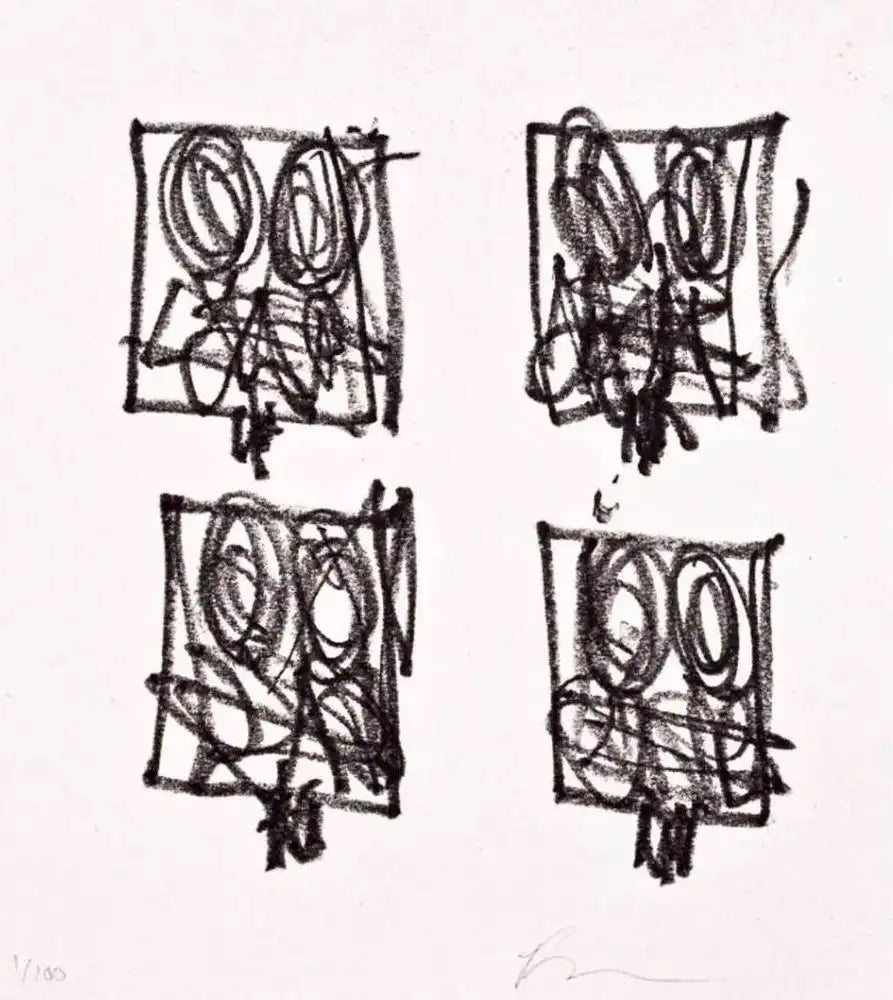
For instance, Johnson's "Anxious Men" series, characterized by repeated, urgently marked faces made using black soap and wax, confronts viewers with raw, emotive expressions that defy easy categorization. These portraits serve as powerful reflections on the complexities of Black identity in contemporary society, inviting viewers to engage with the nuances of race and masculinity.
The Guggenheim Experience: Engaging with Johnson's Art
The Guggenheim’s spiral architecture gave the presentation a distinctive spatial setting. Works could be encountered individually and in relation to the route through the building. That arrangement matters to an account of the exhibition: the viewer’s movement, changing sightlines and comparisons between materials formed part of the experience. The museum setting did not make the objects interchangeable. It created opportunities to notice recurring structures and differences across a varied practice.
The exhibition invited visitors to explore Johnson's thematic preoccupations and artistic techniques, from the meticulous craftsmanship of his sculptures to the bold, expressive strokes of his paintings. The interplay between light and space enhances the impact of Johnson's installations, transforming the museum into a site of discovery and reflection.
Legacy and Influence
Beyond its immediate impact, Rashid Johnson's retrospective at the Guggenheim reflects his enduring influence on contemporary art. His multidisciplinary approach and commitment to exploring complex themes have inspired a new generation of artists to engage with issues of identity, culture, and representation.
Through his innovative use of materials and willingness to challenge artistic conventions, Johnson continues to push the boundaries of what art can achieve. His work serves as a testament to the power of creativity in fostering empathy, understanding, and social change-a legacy that resonates far beyond the walls of the museum.
Conclusion: Rashid Johnson's Artistic Vision
In conclusion, Rashid Johnson's retrospective at the Guggenheim is a testament to his artistic vision and cultural impact. Through a dynamic fusion of mediums, themes, and narratives, Johnson invites viewers to embark on a journey of exploration and introspection-a journey that challenges preconceptions and celebrates the richness of human experience.
Looking back at Johnson's diverse body of work, viewers are encouraged to consider the complexities of identity, history, and community. Ultimately, Rashid Johnson's art reminds us of the transformative power of creativity, offering a profound and poignant reflection on the world we inhabit and the stories that connect us all.
Looking back at a particular exhibition
A Poem for Deep Thinkers should be understood as a specific exhibition within Johnson's wider practice, rather than as a permanent installation at the Guggenheim. Its New York presentation has ended. Consult the museum's exhibition record for the original context and the relevant venue's current information before planning a visit to any later presentation.
A retrospective brings works into relationships that may differ from their original settings. A recurring material or form can become newly visible across years and media. That is one of the useful things to take from the exhibition after it closes: a way to compare the work's developing vocabulary without assuming that every object illustrates the same theme.
Materials have physical as well as cultural roles
Books, mirrors, plants and worked surfaces can carry associations, but they also organise an actual encounter. A reflective area may include the viewer; a living plant changes over time; a shelf establishes order and separation. Reading only for symbolism can miss those physical effects. The work's meaning is produced through how materials behave as well as through what they are associated with.
Ask what a material makes you do. Does it draw you closer, return your gaze, interrupt a view or suggest an object that could be used? These observations give a more concrete basis for interpretation than treating each element as a fixed code. Personal and cultural histories remain relevant without exhausting the visible work.
A repeated face need not be a conventional portrait
The urgently marked faces associated with Johnson's Anxious Men should not be reduced to likenesses of individually identified sitters. Their repeated structures can hold an emotional register while allowing differences of mark, density and surrounding space. A viewer can recognise anxiety without claiming that the image supplies a clinical diagnosis or one definitive account of a person's identity.
Explore the Rashid Johnson collection through the exact medium and publication of each offered work. The Frank Bowling essay provides a useful comparison for thinking about material, history and abstraction together. In both cases, context should deepen attention to the object rather than replace it with a general statement about identity.
Related reading
- Gerhard Richter’s Abstract Language
- Frank Bowling in Edition: Colour, Memory and the Printed Image
- Peter Doig: Painting Memory
Explore related works in the gallery
The following catalogue entries give the recorded medium, dimensions and edition details for related works. Consult each listing and request a condition report when comparing individual examples.


Leave a comment
This site is protected by hCaptcha and the hCaptcha Privacy Policy and Terms of Service apply.