
How dots, nets and repetition connect many bodies of work.
The pumpkin belongs to a wider system including Infinity Nets, accumulations, mirrored rooms and organic motifs.

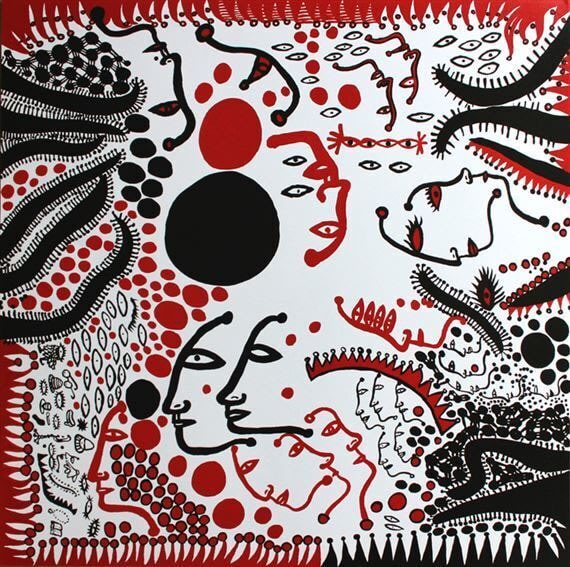
Selected work: I Want To Sing My Heart Out In Praise of Life.
Current examples include Pumpkin MT, Pumpkin Cast Resin Figure - Red, Yellow and Pumpkin Cast Resin Figure - Naoshima. Red (2019). View the complete Yayoi Kusama collection for current availability.
Explore available works by Yayoi Kusama
A practice larger than one motif
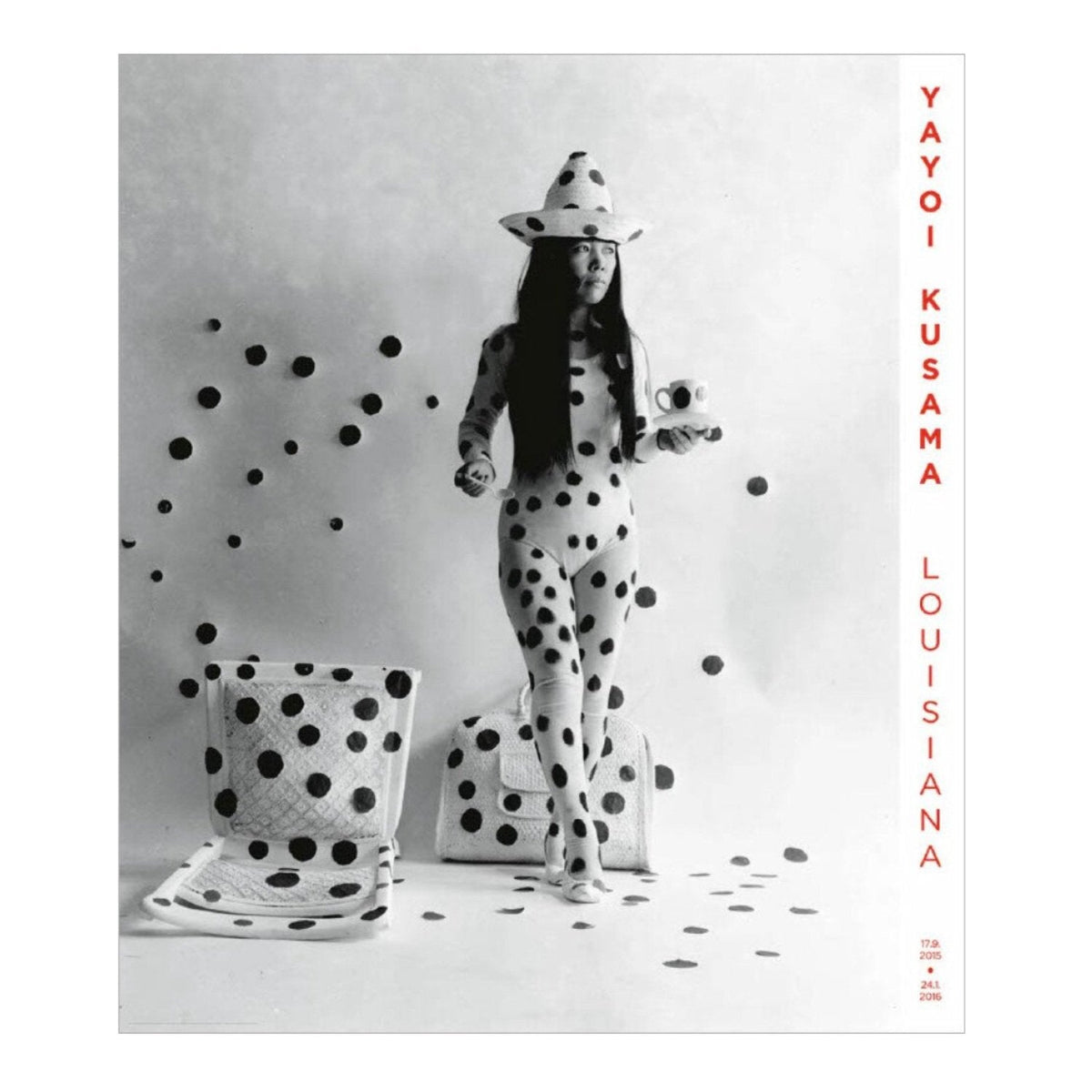
Pumpkins are a powerful entry point, but Kusama’s work also encompasses Infinity Nets, mirrored environments, soft sculpture, performance, fashion and repeated organic forms. Across these media, accumulation can be comforting and unsettling at once. The central concern is not a branded pattern but an attempt to unsettle the boundary between the self and a field that appears limitless.
Collect across ideas, not icons
A thoughtful collection can compare how repetition behaves in print and sculpture, or how scale changes a dot from a graphic mark into an environment. Buyers should still identify each object precisely—medium, date, dimensions, edition, signature and publisher or fabricator—because recurring imagery has been issued in many different forms and qualities.
Follow an operation rather than a symbol
One way to move beyond Kusama's best-known motif is to ask what the work does with repetition. Does it cover an existing object, spread across a flat surface, multiply an image through reflection or build an environment around the viewer? These are related operations, but they produce different experiences. A repeated mark on paper can be inspected from outside; an installation may place your own body within the system you are trying to understand.
The distinction is useful because a dot is not a fixed unit of meaning. It can describe the curve of a pumpkin, interrupt the recognisability of a face or join many other marks in a field with no obvious centre. Its role depends on scale, density and the shape of the space around it. A visual vocabulary becomes more interesting when we notice its changing grammar rather than simply recognise its recurring words.
Nets and the spaces they leave open
In a net, the spaces between marks are inseparable from the marks themselves. Following a small loop, the eye discovers another opening and then another. The image can be read as a mesh placed over a background or as a collection of gaps held together by paint or printed colour. That uncertainty gives a seemingly regular surface an active relationship between figure and ground.
Try looking for a starting point. In many all-over compositions there is no single privileged place to begin. Attention can enter at an edge or settle on a dense passage and then move elsewhere. The lack of a central subject does not mean nothing is happening. It changes the event from recognising an object to navigating a field. The gallery's Infinity Nets essay explores that experience in greater detail.
When repetition enters the room
Mirrors introduce a different mechanism. A finite arrangement can appear to continue beyond its physical limits because reflections repeat what is already present. The viewer may see their own position absorbed into that sequence. This is not the same as physically walking through an endless space, but the tension between what the room contains and what the eye appears to see is central to the encounter.
The Hirshhorn Museum's account of Kusama's Infinity Mirror Rooms offers a useful route into this part of the practice. For a collector of works on paper, the comparison is illuminating without making a print a miniature substitute for an installation. Paper has its own limits and possibilities. Its edges, surface and stable viewing position create a distinct experience of repetition.
Faces, flowers and organic forms
Recognisable subjects complicate the all-over field. A face asks to be read as an individual even when pattern threatens to absorb it. A flower can be understood as a discrete living form while repeated petals and surrounding marks connect it to a larger system. The viewer shifts between identifying something familiar and following the accumulation that unsettles its boundaries.
The gallery's I Want To Sing My Heart Out In Praise of Life is catalogued as a 2009 offset lithograph with text on the reverse. Its title provides a different entry into Kusama's world from the generic recognition of a pumpkin. Read the individual composition and its publication details together. A shared artist does not make this object interchangeable with a signed, numbered screenprint or a cast resin figure.
Scale is more than size
A mark that feels delicate on a small sheet may become bodily or architectural when enlarged. Equally, reducing a familiar motif to an object held in the hand changes the relationship between viewer and artwork. We become aware of weight, reach and proximity. These effects cannot be judged fully from a grid of equally sized website thumbnails, which tends to make radically different objects appear equivalent.
When comparing works, write down their real dimensions and imagine the viewing distance each encourages. Consider whether you want an image to invite close inspection or to establish a rhythm across a room. Neither experience is automatically more significant. Understanding the intended encounter can help a collection develop through meaningful contrasts rather than through a hierarchy based only on physical size.
Keep biography in proportion
Kusama's own accounts of perception and experience are part of the history of her work. They should be approached with care, without treating every repeated mark as a symptom or claiming that a particular object reveals a complete psychological explanation. Art can engage personal experience while also addressing formal, social and philosophical questions. The work deserves close visual attention alongside biographical context.
This broader approach makes the pumpkin more interesting too. It becomes one way of holding together recognisable form and potentially unbounded pattern. Nets, mirrored environments, self-images and organic motifs show other ways of negotiating that relationship. A collection that follows these connections can remain coherent while moving well beyond a single emblem. Start with what you recognise, then investigate the operations that make recognition unstable.
A useful first pairing is a recognisable organic subject beside a largely abstract field. Compare where your eye begins in each and whether it searches for a centre. The contrast can reveal how much a familiar outline organises attention before any interpretation of the artist enters the discussion.

Leave a comment
This site is protected by hCaptcha and the hCaptcha Privacy Policy and Terms of Service apply.