
Why apparently effortless images reward sustained attention.
Ordinary subjects become active through shifts of scale, viewpoint and exposed mark-making.

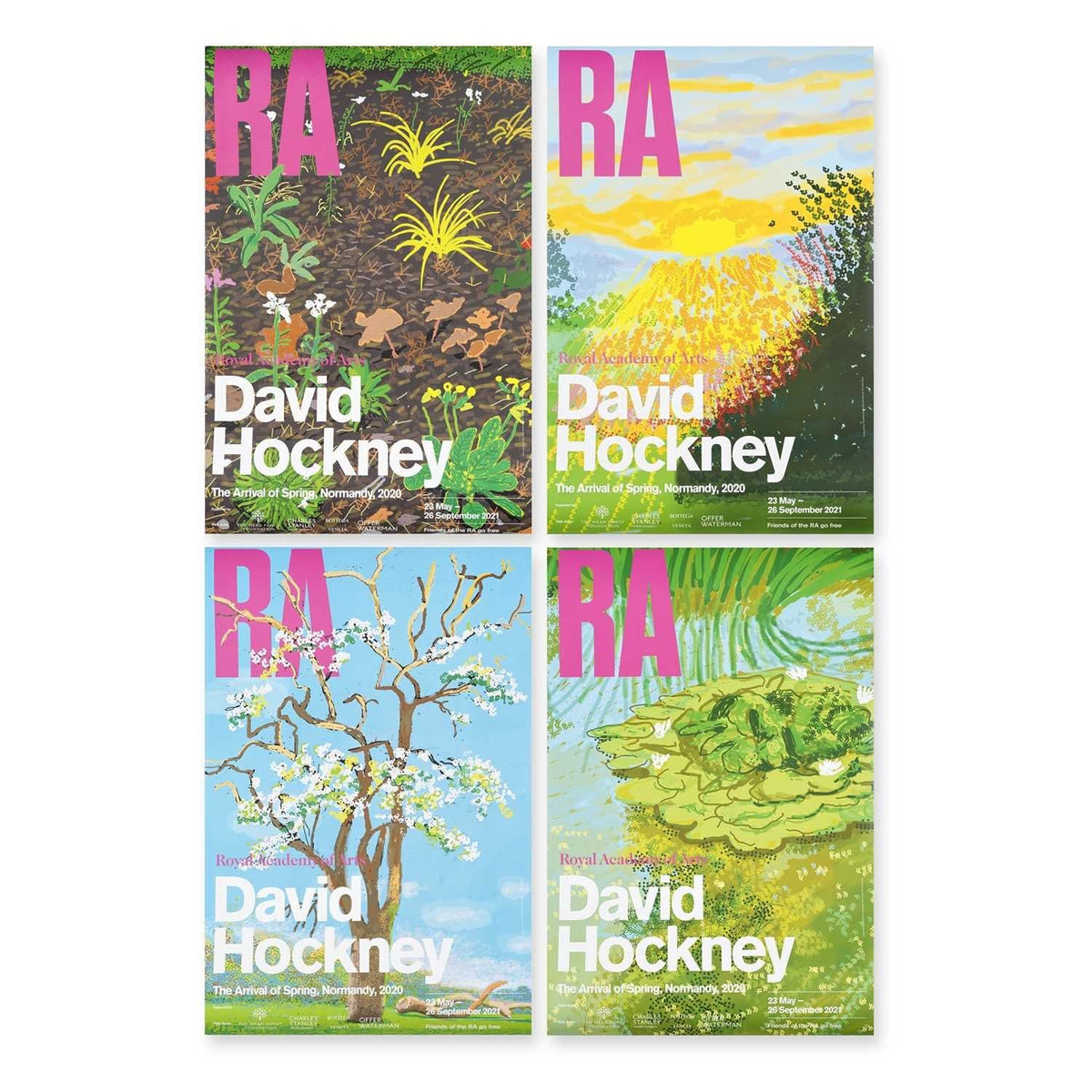
Selected work: Royal Academy Exhibition Posters (4).
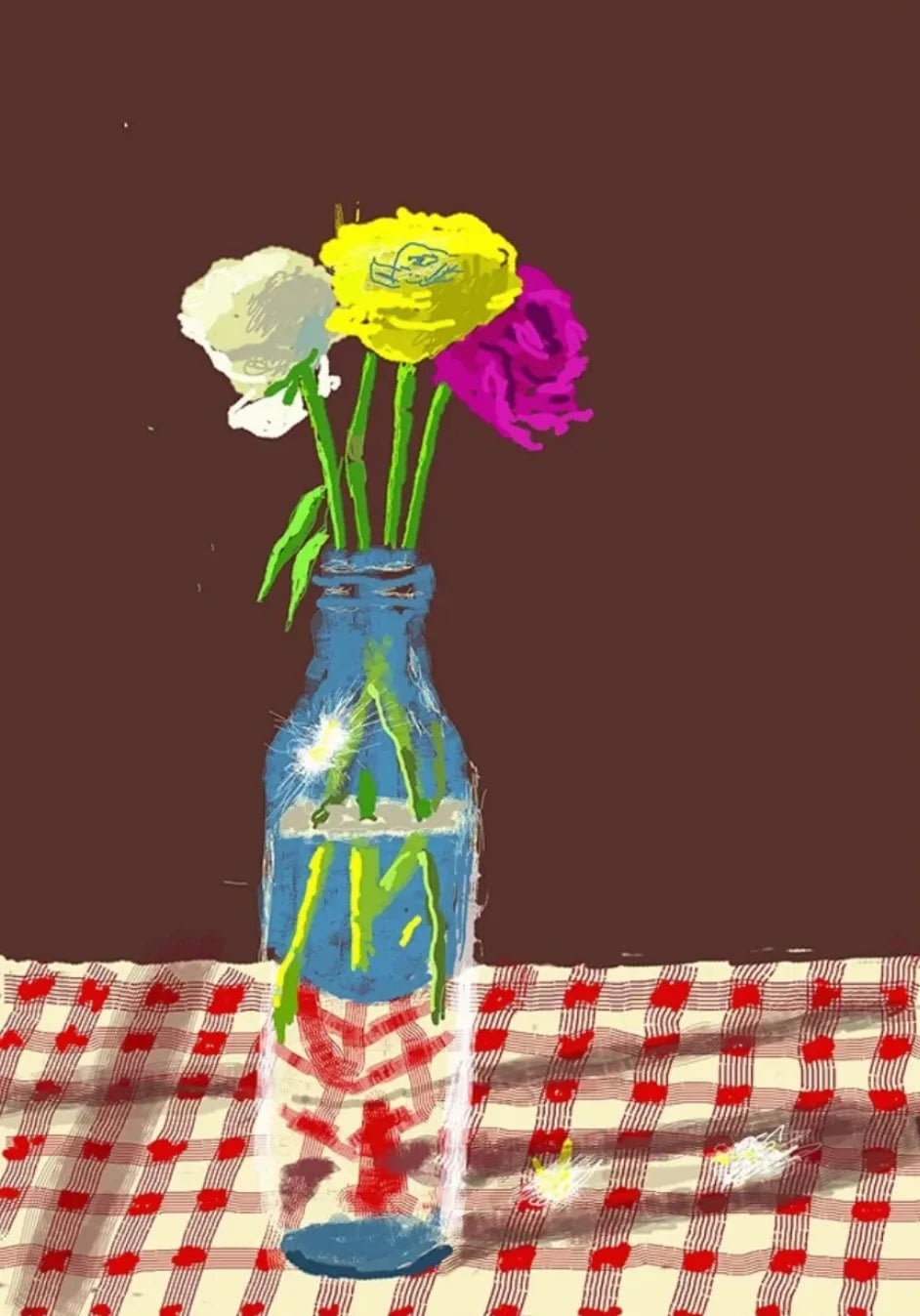
Current examples include Royal Academy Exhibition Posters (4), 20th February 2021, Jug With Flowers and Water Lilies in the Pond with Pots of Flowers (ashtray). View the complete David Hockney collection for current availability.
Explore available works by David Hockney
Looking is an active construction
Hockney’s work repeatedly suggests that vision is not a camera-like recording. The eye moves, attention shifts and memory joins separate moments into an experience. His changing perspectives and assembled viewpoints make that process visible. Looking slowly does not mean passivity; it means recognising how space is built through time.
Implications for works on paper
In prints and drawings, small adjustments of line, colour and interval carry the argument. Reproductions can flatten these relationships, so compare sheet size, technique and surface as well as subject. A quiet image may depend on generous margins or a particular paper tone. Condition and framing should preserve those spatial effects rather than crowding the work.
Recognition is only the beginning
A vase, chair or tree can be recognised almost instantly. That speed of recognition can make a picture feel easy to understand, even when much of its structure has gone unnoticed. Hockney’s work rewards the next stage: looking at how the recognised object has been made visible. A contour may change direction unexpectedly; a colour may connect two parts of the image that represent different things.
Begin with a small area rather than the whole subject. Follow the rim of a jug, the turn of a branch or the edge of a chair. Notice where the line continues and where colour takes over its role. The image does not need to describe every detail for the object to remain convincing. The economy of those decisions can become more interesting than their apparent ease.
This is a practical way to approach Jug With Flowers. Instead of asking only whether the arrangement is attractive, consider how the container, stems and surrounding space are held together. The subject is familiar enough to give the viewer a foothold, while the construction of the picture remains open to closer attention.
The eye does not remain in one place
Ordinary seeing involves movement. We glance towards a detail, adjust our position, remember what we have just seen and join those moments into an understanding of the scene. A picture can acknowledge that activity by making different parts of its space insist on different viewpoints or distances.
When a tabletop seems to tilt or a route through a landscape changes direction, it is worth asking what the adjustment allows you to see. The departure from a single photographic viewpoint may make a particular object more available or encourage the eye to move across the surface. It need not be understood simply as distortion.
Looking slowly means noticing that construction without demanding that it imitate a camera. A convincing picture can organise several kinds of attention within one space. The viewer’s experience is built through movement, even though the marks on the sheet remain fixed.
Intervals can be as expressive as objects
The space between two forms is easy to overlook because it has no obvious name. Yet a narrow gap between flowers, a band of wall beside a chair or a margin around a print can change the whole arrangement. These intervals control the rhythm of looking. They can make the picture feel compressed, expansive, balanced or deliberately awkward.
Try looking at the shapes of the empty areas in a work before returning to the named subjects. A vase may become clearer because of the space around its handle. A branch may be understood through the pale opening between its divisions. The apparent background is actively involved in making the foreground legible.
This attention to interval is especially useful with works on paper. The unprinted sheet may contribute to the image’s breathing space. A mount that conceals the margin can alter the encounter, even when it does not cover the printed composition itself. Full-sheet photographs help establish that relationship before a framing decision is made.
Repetition need not produce sameness
Returning to a familiar subject creates the possibility of noticing change. A flower arrangement varies with the placement of its stems; a landscape changes with the season; a familiar room looks different when the viewer’s attention moves. Repetition can therefore become a method of discovery rather than a return to an already settled formula.
The different images in the gallery’s Royal Academy exhibition poster group can be considered as separate invitations to look. The publication details establish the objects, while the comparison of images reveals shifts in subject and emphasis. A set does not have to be treated as one undifferentiated decoration.
For a collector, this can make a small group more rewarding than a single emblematic image. The relationship between works may be a way of seeing: repeated attention to everyday forms, a willingness to change viewpoint or an interest in how colour creates space. Those connections can become clearer through time.
A simple method for returning to a work
Spend the first minute describing only what you can see: shapes, colours, positions and directions. In the next, consider how your eye moves between them. Only then introduce interpretation. This order does not produce a definitive reading, but it makes the reading more accountable to the image rather than to a familiar story about the artist.
On another day, begin from a different part of the composition. You may find that a detail previously treated as secondary becomes essential to the balance. This is one of the pleasures of living with a work: the image remains materially stable while the viewer’s attention changes.
When choosing an object, accurate information about medium, dimensions and condition should sit alongside this visual interest. Ask whether the work offers a sustained encounter at its actual size, not only an attractive thumbnail. A Hockney can be immediately welcoming and still leave plenty for the eye to do after recognition is complete.
Let the image change between visits
Try returning to the same work at different times of day without changing the lighting specifically for it. Notice whether you first see the brightest colour, a face, a line of furniture or a gap between objects. Your changing point of entry is part of the experience. Slow looking does not require discovering a hidden message: it can mean becoming more precise about relationships that were visible from the beginning but initially passed unnoticed.

Leave a comment
This site is protected by hCaptcha and the hCaptcha Privacy Policy and Terms of Service apply.