
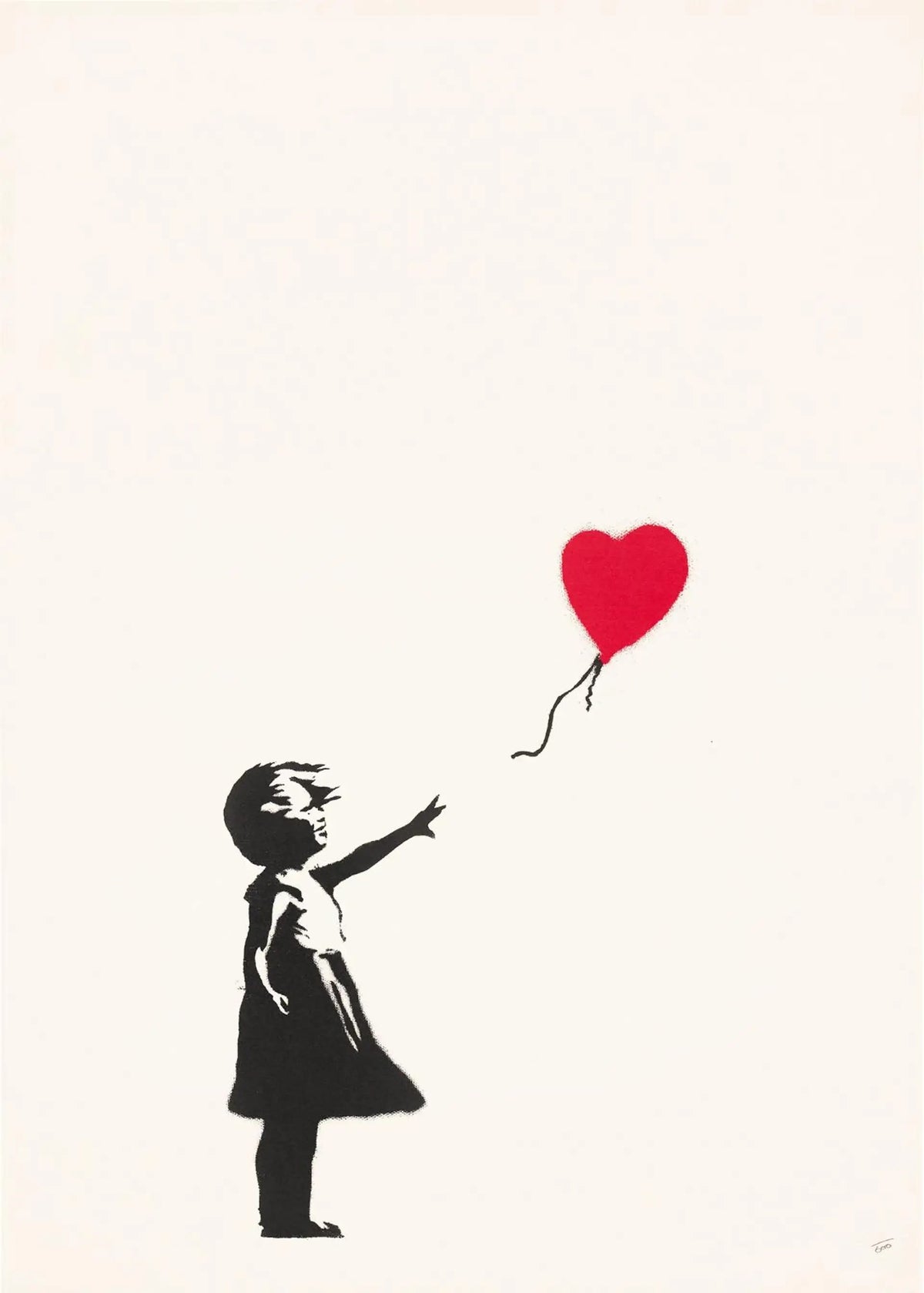
Why documentation is central when buying a Banksy print.
Authentication, provenance, edition markings and physical condition must correspond to the exact work offered.

Selected work: Girl With A Balloon (unsigned).
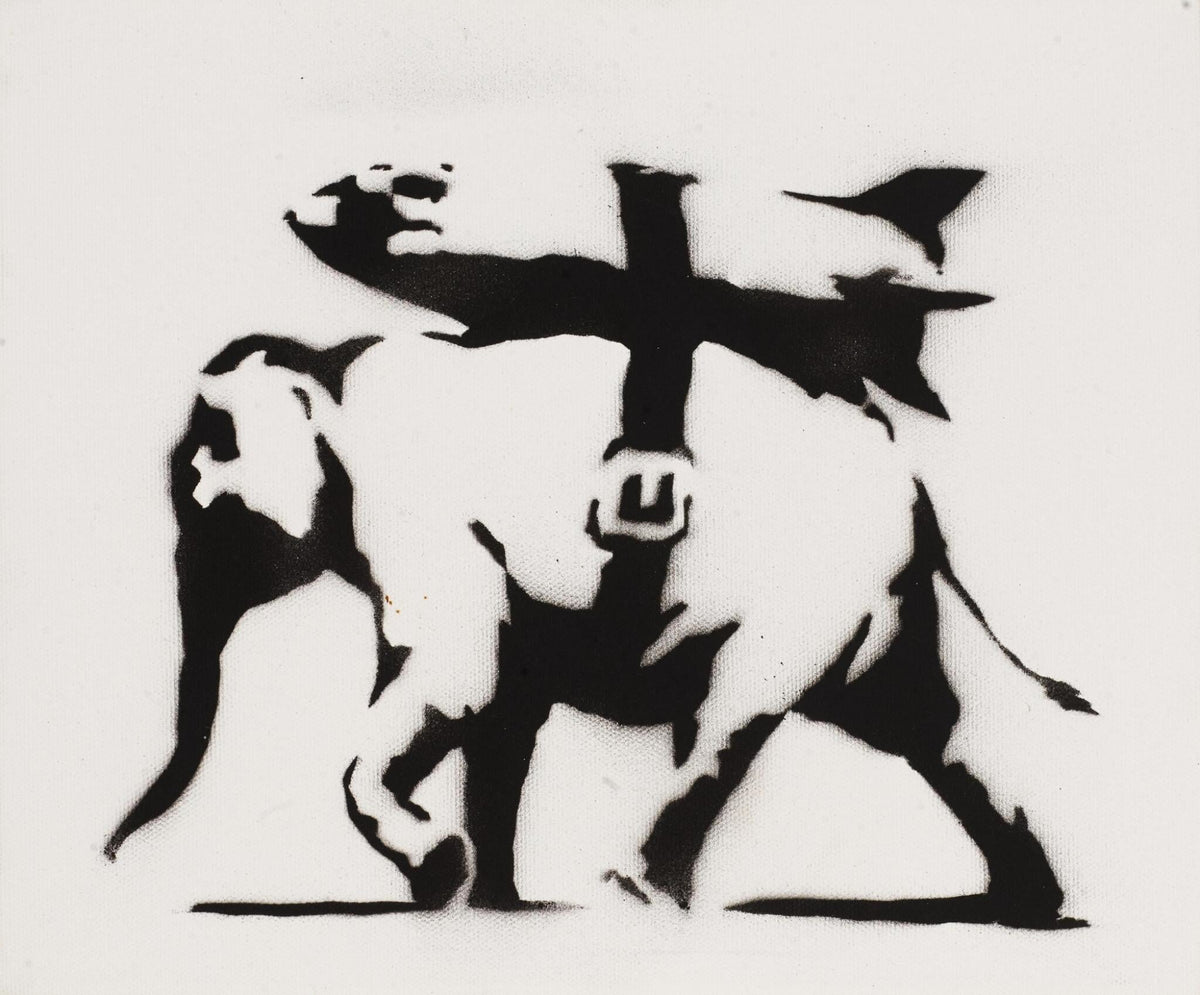
Current examples include Girl With A Balloon (unsigned), Barcode (unsigned) and GDP Rat. View the complete Banksy collection for current availability.
Explore available works by Banksy
What Pest Control does
Pest Control Office is the body established to authenticate Banksy works. Its process matters because the artist’s anonymity and the popularity of the imagery create fertile ground for misdescription and forgery. A certificate relates to a specific object; names, images and edition details should correspond, and buyers should understand how ownership records are transferred where applicable.
What a certificate cannot replace
Authentication addresses authorship, not condition, value or suitability for purchase. A certified print may still be faded, creased, trimmed or poorly restored. Review the physical work, invoice, provenance and return terms separately. Treat photocopies, seller-made certificates and unverifiable claims with caution, and never assume that a COA from an unrelated business carries Pest Control’s authority.
Looking more closely
Pest Control’s certificate is the market’s central authentication document, but it should sit within a complete description of the object. Edition number, dimensions, paper, signature status and condition still need to agree with the work being offered. Buyers should also confirm that the certificate transfers with the print and that any framing or restoration history is disclosed before purchase.
Why Banksy requires a specialist system
Banksy’s anonymity, the public nature of his practice and the global circulation of his images create an unusual authentication problem. A motif may be familiar without a particular object being authorised. Street images are photographed and reproduced constantly, while prints, canvases, posters and unofficial copies can appear superficially similar online.
Pest Control Office exists to assess Banksy works and is the authentication body recognised by the artist’s market. For a collector, that makes its documentation central. A seller’s confidence, a persuasive story or a certificate produced by an unrelated gallery cannot replace it.
Reading the certificate against the work
A certificate should not be viewed in isolation. The identifying information must correspond to the physical object: title, image, medium, dimensions, edition number and signature status where relevant. Check that labels, numbering and other marks are consistent, and ask how the certificate will transfer with the sale.
Photographs of a certificate are not the same as possession of the original document. Buyers should also be alert to attempts to pair genuine paperwork with a different object. The purpose of due diligence is to establish that the artwork and its documentation form one coherent record.
Authentication is not a condition report
Pest Control authentication addresses authorship; it does not promise that an artwork is free from damage or that its price is appropriate. Paper can fade, cockle, crease or suffer from unsuitable mounting. Ink can be abraded, surfaces can be cleaned or retouched, and a frame can conceal sheet edges and edition marks.
Request a separate condition report and, for a significant purchase, consider independent examination. The report should distinguish inherent production characteristics from later damage and disclose restoration. Condition has both aesthetic and commercial consequences even when authenticity is secure.
Provenance, invoice and seller description
Provenance records the work’s history of ownership and sale. It should be assessed alongside—not instead of—authentication. A strong file may include prior invoices, auction records, correspondence and framing or conservation documentation. Gaps do not automatically invalidate a work, but unexplained inconsistencies deserve attention.
The current invoice matters too. It should state the artist, title, date, medium, dimensions, edition and signature status accurately. Avoid descriptions that blur an authorised print, a canvas edition, a poster and a reproduction. Precision protects both parties and makes later resale or insurance easier.
Common warning signs
- A seller claims that a signature alone proves authenticity.
- The certificate details do not match the object or edition number.
- Only cropped images are provided and the reverse or sheet edges cannot be seen.
- The work is described vaguely as an “original” without a precise medium.
- Pressure is applied to complete the purchase before documentation can be checked.
None of these points should be resolved by guesswork. Pause the transaction and establish the facts before funds change hands.
A collector’s sequence
First identify the exact object. Second confirm Pest Control documentation. Third review provenance and seller title. Fourth assess condition independently. Finally compare price with genuinely comparable examples. Following that sequence prevents fame or familiarity from replacing evidence.
Check whether the object falls within the service
Pest Control's official FAQ distinguishes artworks for which it issues certificates from categories such as posters, stickers and defaced currency. It also states that it does not certify illegally executed work. A collector should therefore identify the object before assuming that every Banksy-related item can or should carry the same form of documentation.
This does not justify attaching an unrelated certificate to an ineligible object. It means the category and the evidence need to be described honestly. A poster should be sold as a poster, with whatever publication information is available. An artwork represented as eligible for Pest Control authentication should be checked through the appropriate official process, not through a seller's imitation of it.
Use the official channel for certificate checks
The FAQ links to Pest Control's service for checking or registering artwork. Follow the instructions on the official site, since procedures and requested information can change. Do not rely on an email address copied from an unknown seller or assume that a photograph of paperwork proves a successful check. Record the response that relates to the specific work under consideration.
Keep the artwork's documents secure when requesting advice. Share the information needed for a legitimate assessment through the appropriate channel, rather than publishing complete identifying material indiscriminately. The final purchase record should make clear which documents accompany the work and which checks have actually been completed. An application, an unanswered enquiry and a confirmed result are different stages and should never be described as equivalent.

Leave a comment
This site is protected by hCaptcha and the hCaptcha Privacy Policy and Terms of Service apply.