
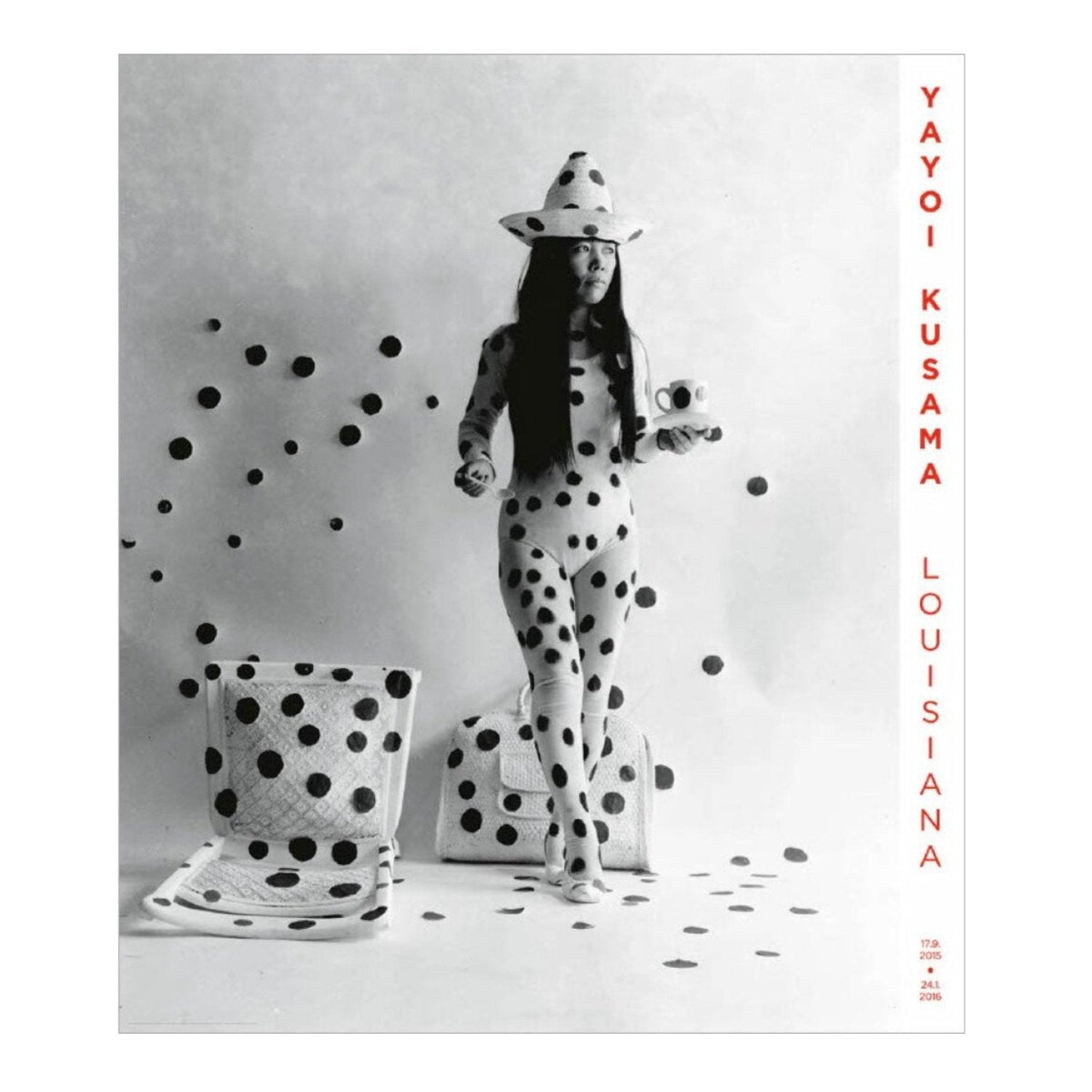
How a repeated gesture became a lifelong structure.
Small looping marks record time and labour while creating a field that appears to continue beyond the edge.

Selected work: Self-obliteration by dots.
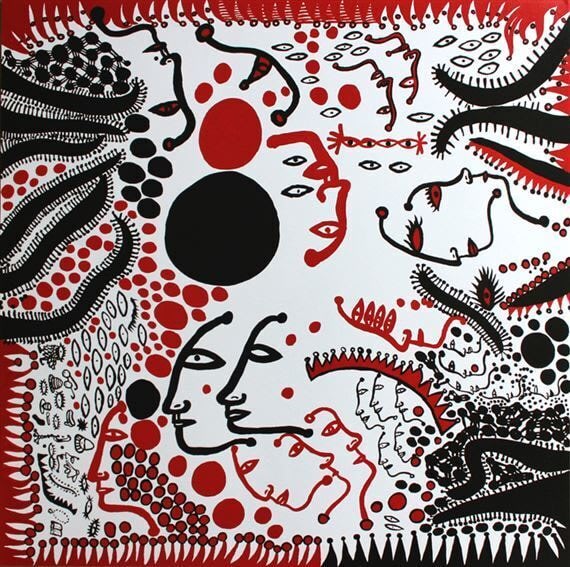
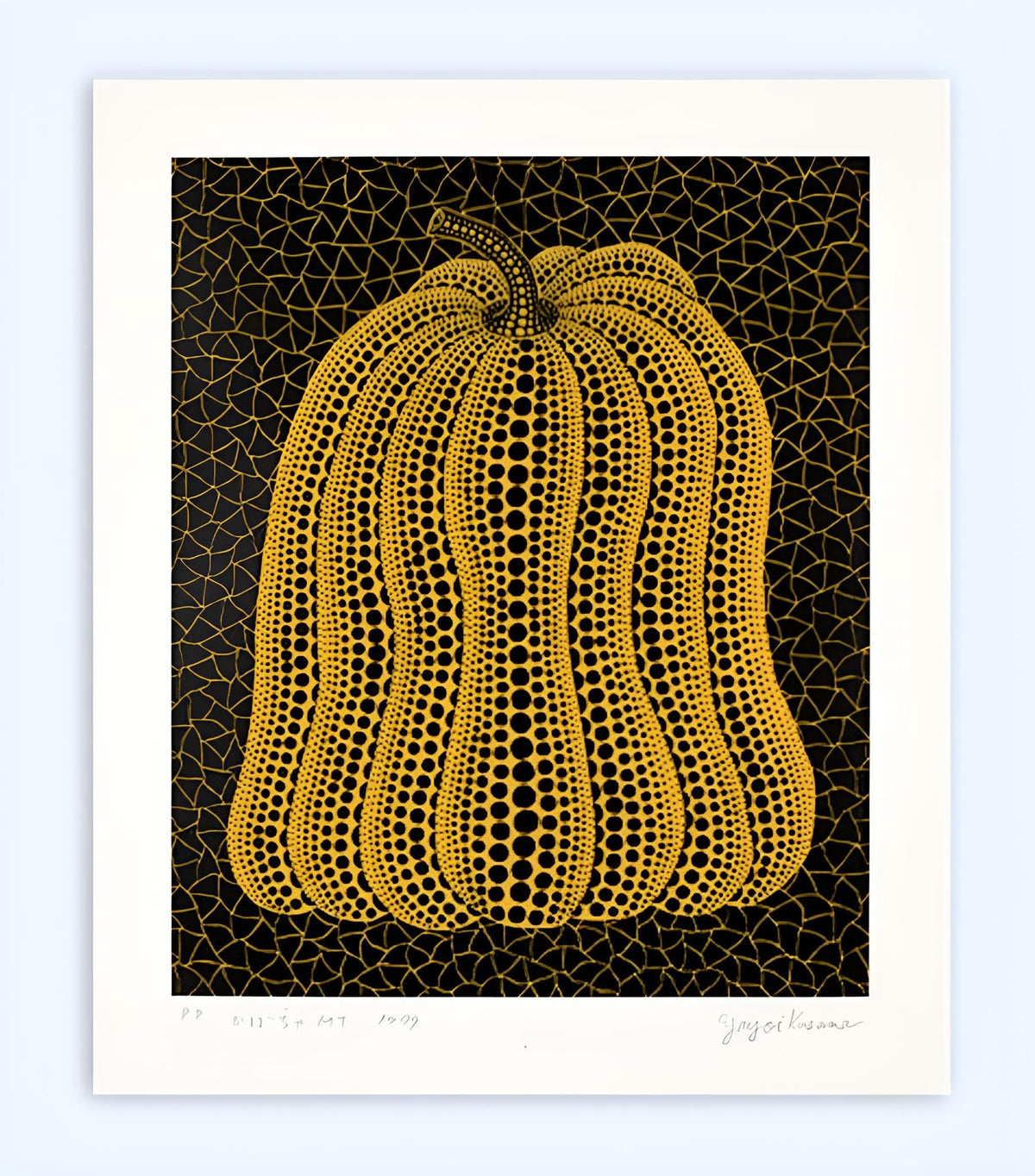
Current examples include Pumpkin GB-D, Pumpkin Cast Resin Figure - Yellow and Pumpkin Cast Resin Figure - Red. View the complete Yayoi Kusama collection for current availability.
Explore available works by Yayoi Kusama
Repetition without a centre
Infinity Net works are built from accumulations of small arcs or loops. No single mark dominates, and the field appears capable of extending beyond the edge. The viewer alternates between reading the whole and noticing the labour of its parts. This relationship between obsession, duration and boundlessness is more important than the net as a recognisable pattern.
Scale changes perception
At intimate scale, the repeated marks invite close inspection; at larger scale, they can overwhelm peripheral vision and approach environment. Printed editions condense that experience but can retain its optical instability. Examine tonal range, registration and paper condition closely, since flattening or fading can reduce the distinction between the net and its ground.
The difference between a net and a field of dots
A dot generally reads as a small positive mark placed on a ground. A net can reverse that relationship: the eye may register the openings between linked gestures as strongly as the gestures themselves. This distinction matters because the vocabulary is often collapsed into one general idea of pattern. Kusama's repeated forms can share an interest in accumulation while organising the visible surface in different ways.
Try following one opening, then the line that encloses it, then the neighbouring opening. The eye moves back and forth between positive and negative shapes. As the sequence expands, an individual unit becomes difficult to isolate from the surrounding field. The experience does not depend on finding a hidden central image. It depends on the instability of what counts as foreground and background.
Repetition records differences as well as sameness
A repeated gesture need not produce identical units. The size of an arc, the closeness of adjacent marks and the amount of ground left visible can vary. At a distance these differences may merge into an apparently even surface. Closer inspection can reveal changes in density and rhythm. The viewer moves between the accumulated effect and the particular decisions from which it is made.
This is a useful alternative to treating repetition as the absence of invention. Maintaining a field can involve constant local adjustment. A passage that becomes denser may seem to advance or darken; a more open area may let the ground breathe through. Even when the overall arrangement feels calm, the eye can remain active within it, discovering variations that a quick photograph compresses.
The edge makes infinity imaginable
The word infinity describes an idea that no finite artwork can literally contain. A painted canvas or printed sheet has measurable edges. Yet an all-over structure can make those edges feel like cuts through an ongoing sequence rather than the natural conclusion of a composition. The viewer supplies an imagined continuation, much as a small section of a landscape can suggest a larger world beyond the frame.
That imagined extension depends on how the surface is organised. A strong central figure might pull attention inward and establish a hierarchy; a net can distribute it more evenly. There may still be areas of greater density or visual weight, but they do not necessarily resolve into a single destination. Looking becomes a process of moving through relationships rather than arriving at a subject.
Scale changes the viewer's task
With a small work, the entire field may fit comfortably within one glance. The viewer can alternate between the whole and its details with little bodily movement. A large surface can exceed that immediate field of attention, requiring a step back or a turn of the head. The marks then relate to the viewer's body as well as to one another. Neither scale reproduces the other's experience exactly.
This is why dimensions should be considered alongside an online image. A cropped detail may suggest monumentality even when the full object is modest. Conversely, a small thumbnail can make a physically enveloping work appear decorative. Ask for both a complete view and a clearly identified detail, then use the measurements to reconstruct the relationship between mark, surface and viewing distance.
How printed imagery relates to the paintings
Prints can carry net structures and related repeated imagery through different processes, but they should not be described as paintings simply because the motif is associated with painted works. The paper, printing method, edition and publication establish what the object is. A printed image may preserve the appearance of a painted gesture while producing a very different physical surface.
The selected Self-obliteration by Dots is catalogued by Dovehouse as a poster on coated paper. It provides related context for Kusama's wider language of repetition; it is not presented here as an original Infinity Net painting. Maintaining that distinction makes the connection more informative. Collectors can explore a shared idea while recognising the particular status of each object through which it appears.
Looking without turning biography into diagnosis
Accounts of Kusama's personal experience have shaped discussion of the nets. They can provide context, but the viewer should avoid claiming that a particular pattern proves a psychological state or that repetition has one fixed therapeutic meaning. The visible work offers questions about labour, duration, perception and the relation between part and whole. Those questions remain available without reducing the artist to a biographical explanation.
A productive viewing exercise is to spend time with the surface before reading an interpretation. Notice where your attention settles, whether it drifts or searches for a centre, and how the experience changes with distance. Then return to the contextual material. This order allows historical understanding to deepen observation instead of replacing it with a label.
The nets remain compelling because a restricted set of marks can generate an unexpectedly open experience. Their apparent simplicity gives the eye something stable to follow, while local variation and imagined continuation prevent that stability from becoming complete. What looks repetitive at first can become a study in how attention itself moves.
Compare the experience of looking at a detail with seeing the complete work. A detail can emphasise the individuality of marks, while the full field makes their accumulation apparent. Neither view is sufficient alone; the relationship between them is part of what gives the net its distinctive force.

Leave a comment
This site is protected by hCaptcha and the hCaptcha Privacy Policy and Terms of Service apply.