
A considered approach to motifs, media and documentation.
The market spans original prints, editioned sculptures, authorised objects and merchandise, making classification essential.

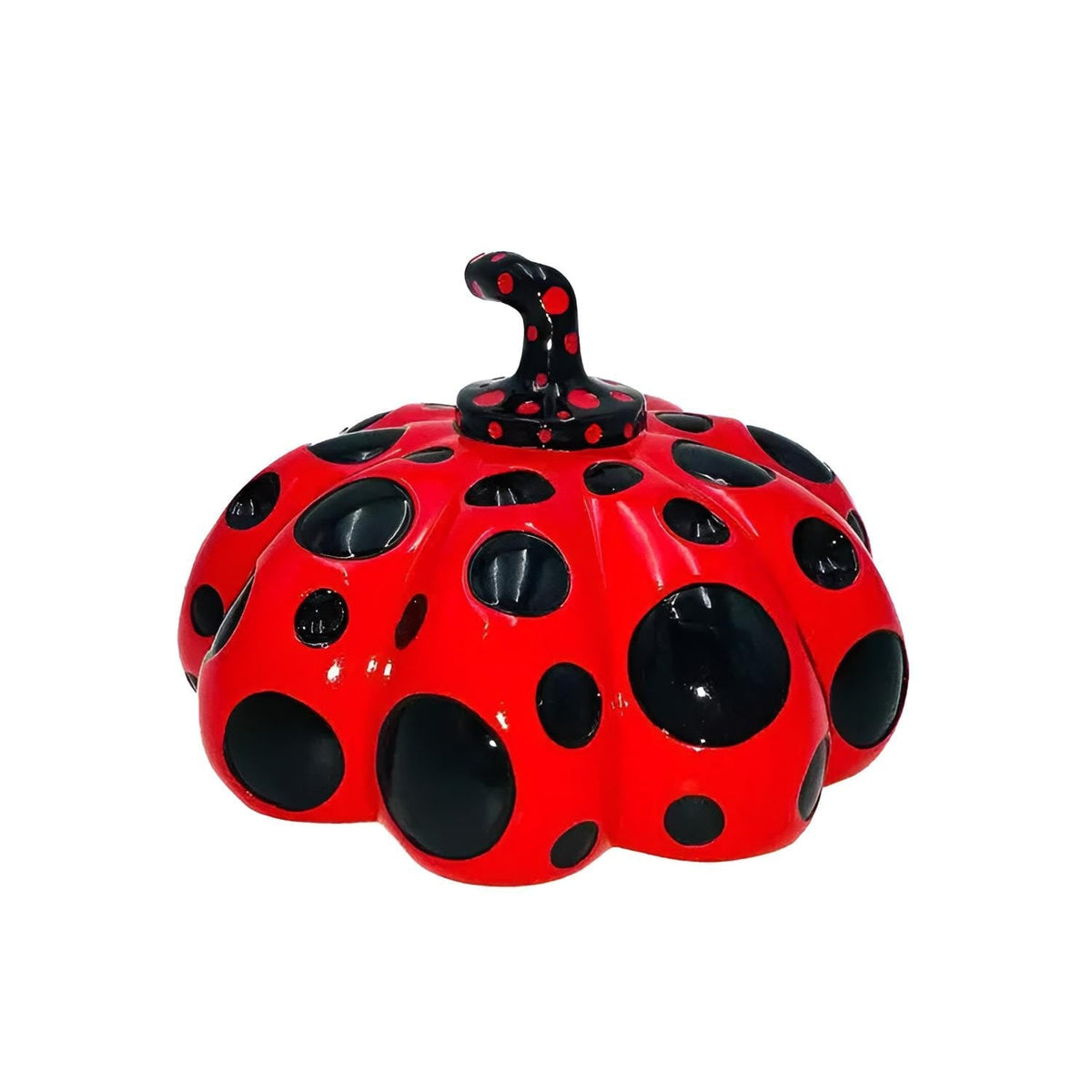
Selected work: Pumpkin Cast Resin Figure - Naoshima. Red (2019).
Begin with the object, not the motif
A pumpkin, net or field of dots may identify the artist immediately, but the first collecting question is what the object actually is. An original print, editioned resin sculpture, authorised multiple and mass-produced item occupy different categories. Record the exact title, date, medium, dimensions, edition markings and publisher or fabricator before using price as a guide.
Prints reward close comparison
Kusama’s graphic language can make related works look deceptively similar on a screen. Compare the density of pattern, paper, printing process, sheet size and margins. A work such as My Self-Portrait Done When I Was Heartbroken should be understood through its specific composition and edition details, not simply grouped with every dotted image.
Colour is part of condition
Colour is structural in Kusama’s work. Uneven fading, prolonged exposure or surface disturbance can alter the relationship between dots and ground. Ask for photographs in neutral light, examine margins and verso where possible, and distinguish normal characteristics of the printing process from later damage.
Sculptural editions ask different questions
For objects such as Pumpkin Cast Resin Figure – Naoshima, Red, inspect the surface, base, edition marks and original packaging. Glossy finishes can make abrasions conspicuous, while missing boxes or documentation may affect desirability.
Build through ideas, not trophies
A coherent Kusama collection can trace repetition across nets, pumpkins, flowers, figures and three-dimensional objects. This approach reveals the continuity of the practice and avoids reducing it to one famous emblem. Explore available Yayoi Kusama works with those relationships in mind.
Continue reading
Build an object-level comparison
Start a shortlist with one row for each actual work, including its full title, date, medium, dimensions, edition information and documented markings. Add the publisher or fabricator when known, then note what remains unanswered. This makes a mixed catalogue easier to understand. An offset publication and a signed screenprint can look equally vivid in photographs while offering different physical and historical objects.
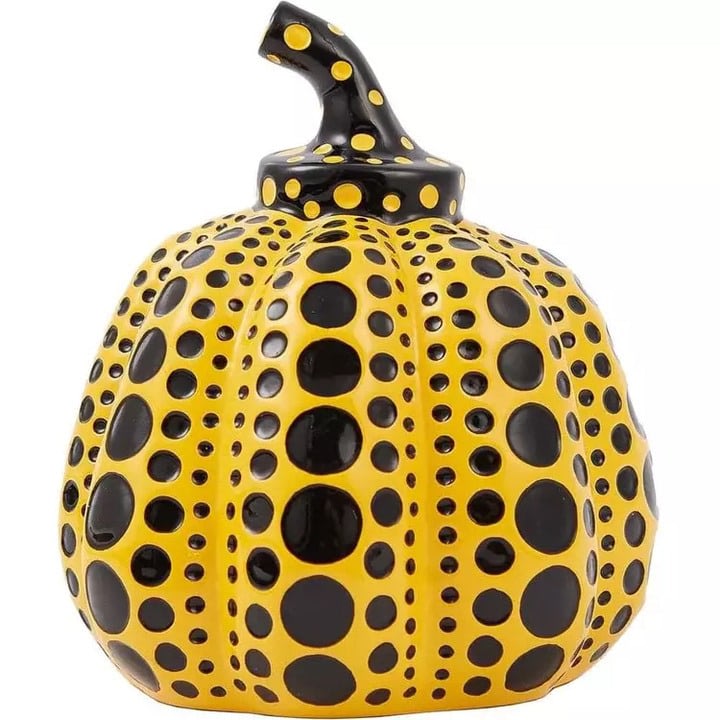
Within Dovehouse's catalogue, Pumpkin MT is a screenprint on paper, while the red and yellow cast resin figures are three-dimensional objects. Keeping those categories separate is essential. A pumpkin motif cannot tell you whether you are buying a print, sculpture or authorised product. The written specification must do that work before the image's familiarity begins to influence your judgement.
What edition numbers can and cannot establish
A fraction or proof designation helps describe a work's place within an edition, but it needs a documented context. Ask about the regular edition, any recorded proof groups and how the offered impression is inscribed. A number on its own does not establish authenticity or confirm that all examples were produced in exactly the same way. It should agree with the publication information and the physical characteristics of the sheet.
For an object with no stated finite edition, do not infer a small production run from the absence of many comparable listings. Market visibility is not an edition record. The gallery should distinguish a documented number from an estimate or an unknown quantity. A candid description of what is known gives the collector a firmer basis for choice than a vague claim of extreme rarity.
Signature, printed name and publication text
Signing information deserves its own question. Is the signature applied by hand to the work, reproduced within the image, printed on the reverse or absent? An authorised publication can carry printed text without being individually signed. For example, the catalogue descriptions of the offset self-portrait and I Want To Sing My Heart Out In Praise of Life record text on the reverse; that should not be silently upgraded into a hand-signature claim.
Ask for photographs of any inscription and of the complete reverse where available. Read those alongside provenance and publication details. A certificate or box may add context, but it should identify the actual object and come from a relevant source. General promotional material about the artist is not the same as documentation of a particular work.
Separate the image from the condition
Kusama's patterns can conceal small defects in busy passages while making them conspicuous in a flat ground. Inspect both. With paper, look for handling creases, stains, fading, edge damage and evidence of mounting. With a painted object, examine the base, stem and curved surfaces for chips or retouching. A report should locate any issue clearly enough that it can be matched to photographs.
Condition should also be assessed in relation to the work's intended appearance. A dense black ground may make a small abrasion particularly visible; a pale paper margin may show discoloration that alters the balance of the entire sheet. These effects are not captured by a single adjective such as good or excellent. Ask what has been inspected, including whether framed paper has been examined outside its mount.
Choose a collecting question
One collector might follow the pumpkin across different media. Another might concentrate on self-images, flowers or the relation between nets and open ground. A third might be interested in the history of printed publications. Each approach gives the collection a question to investigate. That question can be more useful than trying to assemble a representative example of every famous motif.
Compare the works in terms of what they reveal about that question. Does a change of medium alter the rhythm of the pattern? Does a smaller scale invite a more intimate encounter? Does a title introduce a personal or emotional register that the image alone does not settle? These observations help turn a group of recognisable objects into a collection with an intelligible point of view.
Prepare for ownership before purchase
Confirm what is included: the artwork, frame, original packaging, documentation and any specified accessories. Discuss delivery and unpacking for fragile objects, and establish whether a work on paper requires new framing. Keep the invoice, condition report and photographs together after purchase. If further research clarifies the publication, add that information without discarding the earlier record of what was originally supplied.
The aim is a collection you can describe accurately and enjoy confidently. Familiarity with Kusama's imagery is a useful beginning, but the individual work deserves a more exact account. Let its medium, scale, pattern and history guide the decision, with price considered in relation to those characteristics rather than as a substitute for them.

Leave a comment
This site is protected by hCaptcha and the hCaptcha Privacy Policy and Terms of Service apply.